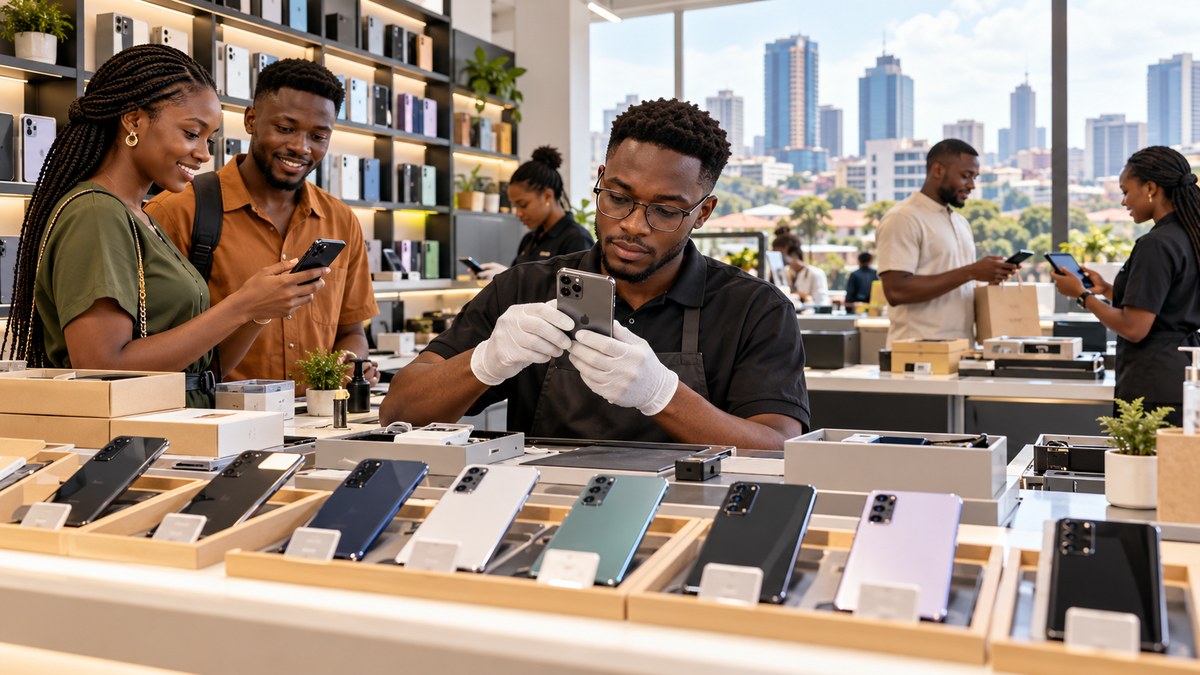
The numbers are staggering. In 2026, for every new smartphone sold in Lagos, Nairobi, or Johannesburg, nearly two are sold on the secondary market. This shift is not a minor trend. It represents a fundamental change in how Africa adopts technology. The continent is skipping the “new phone every year” model and embracing a circular economy built on refurbished devices. Startups across the continent are turning the trade-in into a core business model, and the data shows this market is now rivaling new phone sales in volume and value.
The African smartphone resale market is projected to grow over 30% in 2026, outpacing new device sales in key markets like Nigeria, Kenya, and Ghana. Startups are driving this growth by offering certified refurbished devices, flexible payment plans, and trade-in programs that make premium technology accessible to millions of first-time and upgrade-seeking users.
Why the resale market is winning
The economics are simple but powerful. A brand new flagship smartphone can cost three to six months of rent for an average worker in Nairobi. A certified refurbished model from last year costs half that amount but delivers 90% of the performance. That value gap is the engine behind the African smartphone resale market growth in 2026.
But price is only part of the story. Trust has been the missing ingredient for years. Buyers worried about stolen devices, bad batteries, or hidden damage. Startups have solved this by introducing rigorous certification programs. They now offer warranties, return policies, and even financing. These moves have turned a risky transaction into a reliable purchase.
How startups are building the infrastructure
The ecosystem is maturing fast. Here is how the leading companies are creating a market that now competes with OEM sales channels.
- Certification and grading. Each device is tested for screen quality, battery health, camera function, and water damage. Devices are graded A, B, or C. Grade A devices look and work like new.
- Warranty and returns. Buyers get a minimum six-month warranty. This removes the fear of buying a device that dies after a week.
- Trade-in programs. Users can trade an old phone for credit toward a newer model. This creates a steady supply of inventory and keeps customers inside the ecosystem.
- Financing partnerships. Startups partner with mobile money platforms like M-Pesa and fintech lenders to offer installment plans. A phone that costs $200 can be paid over six months with no interest.
These four steps have turned a chaotic bazaar into a structured industry.
The role of mobile money
The rise of the resale market would not be possible without the parallel growth of digital payments. In 2026, most transactions for refurbished phones happen through mobile money. This matters for two reasons. First, it provides a digital trail that builds trust between buyer and seller. Second, it allows for the installment plans that make phones affordable.
A buyer in Accra can put down 30% of the price via mobile money and pay the rest over three months. The startup holds the device in escrow until the final payment clears. This model is now standard for the top resale platforms.
“The secondary smartphone market in Africa is not about cheap phones. It is about access. We are giving people the ability to own a device that can change their economic reality. That is the real story of the circular economy here.” – Founder of a leading Nairobi-based refurbisher
Comparing the resale models
Different startups use different approaches. The table below breaks down the main models and their benefits.
| Model | How it works | Best for | Risk level |
|---|---|---|---|
| Certified refurbisher | Company buys bulk lots, tests, grades, and resells with warranty | Buyers who want quality assurance | Low for buyer, medium for seller |
| Peer-to-peer marketplace | Platform connects individual sellers and buyers, takes a commission | Sellers who want higher prices | Medium for both parties |
| Trade-in aggregator | Buys old phones from users, sells them to refurbishers or overseas markets | Users who want instant cash | Low for user, high for aggregator |
| Subscription leasing | Customer pays monthly fee, returns phone after 12 months | Users who always want latest model | Low for user, medium for company |
Each model has a place. The certified refurbisher model is growing fastest because it balances trust with scale.
Common pitfalls for new startups
Not every company entering this space succeeds. The market has specific traps that can kill a business. Here are the mistakes to avoid.
- Buying inventory without testing battery health. A phone with a swollen battery is worthless.
- Ignoring local logistics. Shipping a phone across Lagos can cost more than the profit margin.
- No warranty program. Buyers will not trust you without a guarantee.
- Poor grading standards. Selling a Grade C phone as Grade B destroys your reputation.
- Not partnering with a payment provider. Cash transactions are hard to track and scale.
Avoid these, and you have a fighting chance.
What the data says for 2026
The numbers back up the hype. According to industry estimates, the African smartphone resale market is expected to reach $6 billion in transaction value this year. That is a 30% increase from 2025. Nigeria, Kenya, Ghana, and South Africa account for roughly 70% of that volume. The average selling price for a refurbished device is $180, compared to $450 for a new mid-range phone.
The growth is being driven by two trends. First, the number of first-time smartphone owners in Africa is still rising. Many of these users enter the market through a refurbished device. Second, upgrade cycles are getting shorter. Users who bought a refurbished phone two years ago are now trading it in for a newer model. This creates a self-sustaining loop.
For a deeper look at which devices are leading the charge, check out our list of top 10 budget smartphones dominating the African market in 2026. And if you are a business owner, our guide on how to choose the right smartphone for your business in Africa can help you make a smart investment.
What this means for investors and founders
If you are tracking the African smartphone resale market growth in 2026, the opportunity is clear. The market is not a side business anymore. It is a primary channel for device distribution. For investors, the key metrics are inventory turnover rate, warranty claim rate, and repeat purchase rate. Startups that score well on these three metrics are building durable businesses.
For founders, the advice is simple. Focus on trust, logistics, and financing. The technology to test phones is getting cheaper. The demand is proven. The missing link is often operational execution.
A growing ecosystem of innovation
The resale market is also creating secondary opportunities. Repair shops are booming. Accessory makers are selling cases and chargers specifically for older models. Software companies are building tools to help refurbishers test devices faster. Fintech firms are creating credit scoring models based on phone payment history. The entire ecosystem is growing together.
You can see this reflected in the broader landscape. Our article on emerging African innovations transforming the tech landscape in 2026 covers some of the adjacent trends. And for those interested in the hardware side, we have a breakdown of 5 African smartphone brands making waves in 2026.
A new kind of phone economy
The African smartphone resale market growth in 2026 tells a story of resourcefulness. It is a market built not on scarcity, but on smart reuse. Startups are proving that a phone does not need to be new to change a life. They are building businesses that are profitable, sustainable, and deeply needed. For the millions of Africans who rely on a smartphone for work, education, and connection, this resale economy is not a second choice. It is the smart choice.
If you are a founder or an investor looking at this space, the time to act is now. The infrastructure is in place. The customers are ready. The only question is who will build the next great company in this booming market.