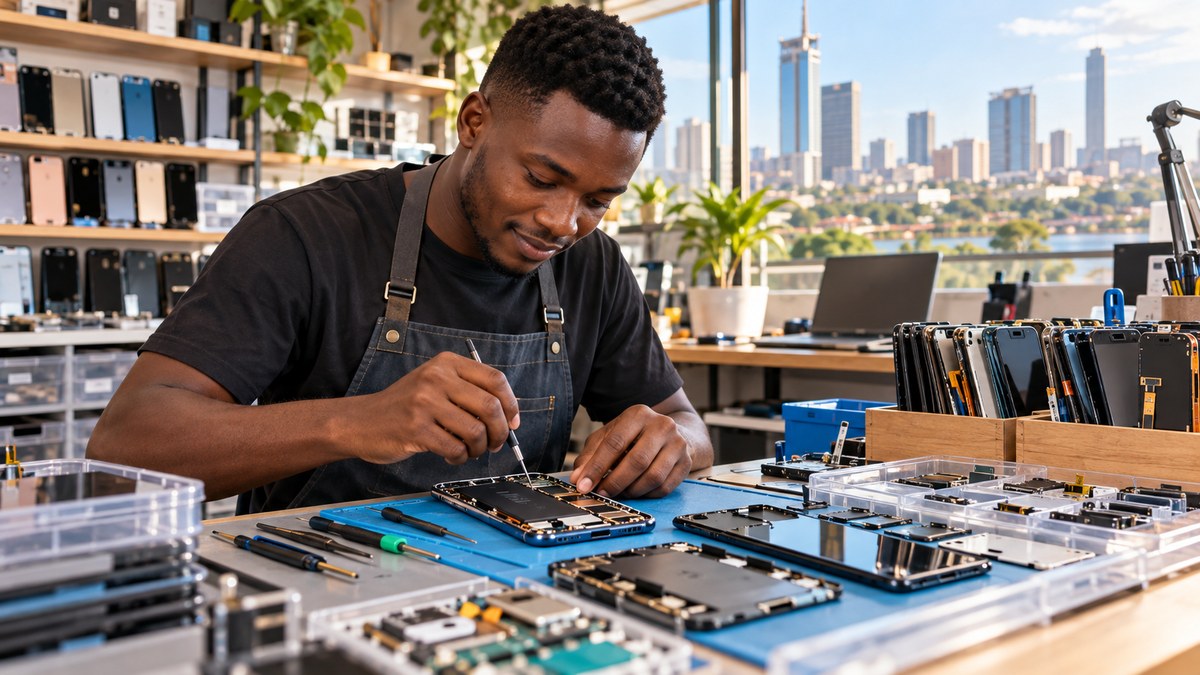
You walk into a repair shop in Nairobi or Lagos with a cracked screen. Six months ago, the quote would have made you wince. You might have considered just buying a cheap replacement phone instead. But in 2026, that same repair costs nearly half of what it did last year. This isn’t a fluke. It is the result of a quiet revolution in local supply chains, training, and market competition. For the first time, keeping your phone alive longer is actually the cheaper option.
Smartphone repair costs across Africa have dropped by up to 40% in 2026 due to three main factors: local manufacturing of replacement parts, a surge in certified repair training programs, and fierce price competition among independent shops. For consumers, this means fixing a broken screen or battery now costs less than a month of data. For small repair businesses, margins are healthier than ever, making this the perfect time to invest in repair tools and skills.
What Changed in 2026?
The biggest shift is simple: parts are no longer luxury imports. In 2024, most replacement screens and batteries had to be shipped from China or Dubai, adding weeks of delay and heavy customs fees. By 2026, at least five African countries have started local assembly lines for common smartphone components. Kenya, Nigeria, Ghana, South Africa, and Rwanda now produce basic LCD screens, battery packs, and charging ports for popular mid-range phones.
This local production cuts shipping costs by more than 60%. It also means fewer fake parts. When a repair shop in Accra can buy a certified screen from a distributor in the same city, the price drops and the quality goes up.
Three Forces Driving Down Prices
1. Local Parts Manufacturing
Companies like M-KOPA in Kenya and local tech incubators in Lagos have partnered with Asian manufacturers to set up small-scale component factories. These factories focus on the most commonly broken parts: screens, batteries, and charging flex cables. Because they are made locally, there is no 30% import duty added to the final price. A screen that cost $45 in 2024 now costs around $22 in 2026.
2. A Boom in Certified Repair Training
Repair shops used to rely on trial and error. A technician might learn by watching YouTube videos and practicing on old phones. That led to inconsistent quality and often made problems worse. In 2026, organizations like the African Repair Academy and local tech hubs in cities like Kigali and Johannesburg offer affordable three-month certification programs. These courses teach proper soldering, diagnostics, and battery handling.
More trained technicians means more competition. Shops in the same neighborhood now compete on price and warranty. A customer in Dar es Salaam can find three shops within a kilometer, all offering a six-month warranty on screen replacements. That competition pushes prices down.
3. The Rise of Refurbished Phone Ecosystems
The refurbished phone market has exploded. When people trade in old phones for newer models, those devices go to refurbishers who repair them and resell them. This creates a steady supply of used but functional parts. A refurbisher in Lusaka might harvest a working screen from a water-damaged phone and sell it for half the price of a new one. This secondary market for parts has become a backbone for affordable repairs.
A Practical Guide: How to Get the Best Repair Deal in 2026
If you are a consumer or a small repair shop owner, here is a step-by-step process to make sure you are paying the right price.
-
Check for local parts availability. Before agreeing to a repair, ask the technician if they use locally sourced parts. If they say they import everything, the price will be higher. Look for shops that advertise “local parts” or “same-day repair.”
-
Get three quotes. Because competition is high, prices can vary by 30% between shops in the same area. Use WhatsApp to send photos of the damage to three different shops. Compare not just price but also warranty length.
-
Ask about the warranty. A reputable shop will offer at least three months on a screen or battery replacement. If a shop offers no warranty, walk away. Cheap repairs without warranty often mean low-quality parts.
-
Verify the technician’s training. In 2026, many shops display certificates from the African Repair Academy or similar programs. A trained technician is less likely to damage your phone further.
-
Consider a refurbished part. If your phone is older than two years, a refurbished original part might be better than a new third-party part. Refurbished parts come from real phones and often fit better.
Common Mistakes That Cost You Money
Even with lower prices, some habits can waste your cash. The table below shows what to avoid and what to do instead.
| Mistake | Why It Hurts Your Wallet | Better Approach |
|---|---|---|
| Going to the cheapest shop first | Cheap shops often use counterfeit parts that fail in weeks | Pay a little more for a shop with a solid warranty |
| Replacing the whole phone for a cracked screen | Many people assume repairs are still expensive | Get a quote first; screen repairs are often under $30 now |
| Using unofficial repair shops for water damage | Water damage needs proper drying and cleaning | Find a certified technician who uses ultrasonic cleaning |
| Ignoring battery swelling | A swollen battery can damage the screen and motherboard | Replace the battery immediately; it costs less than $15 |
| Buying a new charger instead of fixing the port | A charging port repair is often cheaper than a new charger | Get the port cleaned or replaced for under $10 |
What This Means for Small Repair Shop Owners
If you run a phone repair business, 2026 is a great time to grow. Margins are better because parts cost less. Customers are more willing to pay for repairs because they know prices have dropped. But you need to adapt.
- Stock local parts. Avoid relying on imports for common repairs. Build relationships with local distributors.
- Get certified. Customers are starting to ask for certified technicians. A certification from a recognized program can help you charge a premium.
- Offer warranties. A three-month warranty builds trust. It also reduces the chance of a customer going to a competitor next time.
- Use social media to show your work. Before-and-after photos of screen repairs or battery swaps are very effective. Share them on WhatsApp groups and Instagram.
“The biggest mistake repair shop owners make is thinking they have to compete on price alone. In 2026, customers care more about speed and warranty. If you can fix a phone in one hour and guarantee it for six months, you will win.” – Amara Okafor, founder of the African Repair Academy
The Role of Smartphone Brands
Global brands have also noticed the shift. In 2026, companies like Xiaomi and Tecno have started offering official repair kits to African shops. These kits include genuine parts and tools. They cost less than the gray market alternatives. This move is partly driven by new “right to repair” laws being discussed in Kenya and South Africa. While not yet law, the threat of regulation has pushed brands to make repairs easier and cheaper.
For consumers, this means you can now get a genuine screen replacement for a Tecno phone in Lagos for about $25, including labor. Two years ago, that same repair would have cost $60 and required a two-week wait.
How to Choose Between Repair and Replacement
Even with lower costs, sometimes a phone is not worth fixing. Here is a simple rule of thumb:
- If the repair costs less than 30% of the phone’s current resale value, repair it.
- If the phone has multiple broken parts (screen, battery, and charging port), consider replacing it.
- If the phone is more than four years old, check the price of a refurbished model first.
For example, if your phone is worth $100 and the screen repair is $25, that is 25% of the value. It makes sense to fix it. But if the same phone needs a screen, battery, and speaker, the total might be $60. In that case, a refurbished phone of the same model might cost $80. You are better off buying the refurbished one.
The Bigger Picture: Why This Matters for Africa
Lower repair costs are not just about saving money on a cracked screen. They change how people use technology. When repairs are affordable, people keep their phones longer. That means less electronic waste. It also means more people can afford to own a smartphone in the first place, because they know they can fix it if it breaks.
For small business owners, a working phone is essential for mobile payments, inventory management, and customer communication. In 2026, a phone repair no longer means losing a week of business. You can drop off your phone in the morning and pick it up after lunch.
This trend also supports local jobs. Repair shops are growing. They hire young technicians, train them, and pay them fair wages. According to a 2026 report from the African Tech Alliance, the repair sector has created over 50,000 new jobs across the continent in the last 18 months. Most of those jobs are for people under 30.
What to Watch Out For
Not everything is perfect. Some challenges remain.
- Counterfeit parts still exist. Even with local manufacturing, fake parts are sold on open markets. They look real but fail fast. Always buy from a known distributor.
- Not all shops are trained. Certification is growing, but many rural areas still have untrained technicians. If you live outside a major city, you may need to travel for a quality repair.
- Some brands are still hard to fix. Apple and Samsung premium models often require special tools. Repairs for these phones are still more expensive, though prices are dropping slowly.
If you want to learn more about which phones are easiest to repair, check out our guide on top 10 budget smartphones dominating the African market in 2026. It includes a breakdown of which models have the cheapest replacement parts.
A Final Thought on the Future
The days of tossing a phone because of a small crack are ending. In 2026, the repair ecosystem in Africa has matured. Parts are local. Technicians are trained. Competition is healthy. For the cost-conscious consumer, this is a win. For the small business owner, it is an opportunity.
If you have been putting off a repair because you thought it would be too expensive, get a quote today. You might be surprised at how low the price has gone. And if you run a repair shop, now is the time to invest in training and local parts. The market is ready for you.
Your Next Steps
Here is what you can do right now to take advantage of affordable smartphone repairs in Africa in 2026.
- If your phone has a cracked screen or a weak battery, call three local shops and ask for a quote. Compare prices and warranties.
- If you are a repair shop owner, contact a local parts distributor and ask about their pricing for bulk orders. Look into certification programs for your team.
- If you are thinking of buying a new phone, consider a model that is popular in your area. Popular phones have the cheapest parts and the most trained technicians.
Repair is no longer a last resort. It is a smart financial choice. Use it.