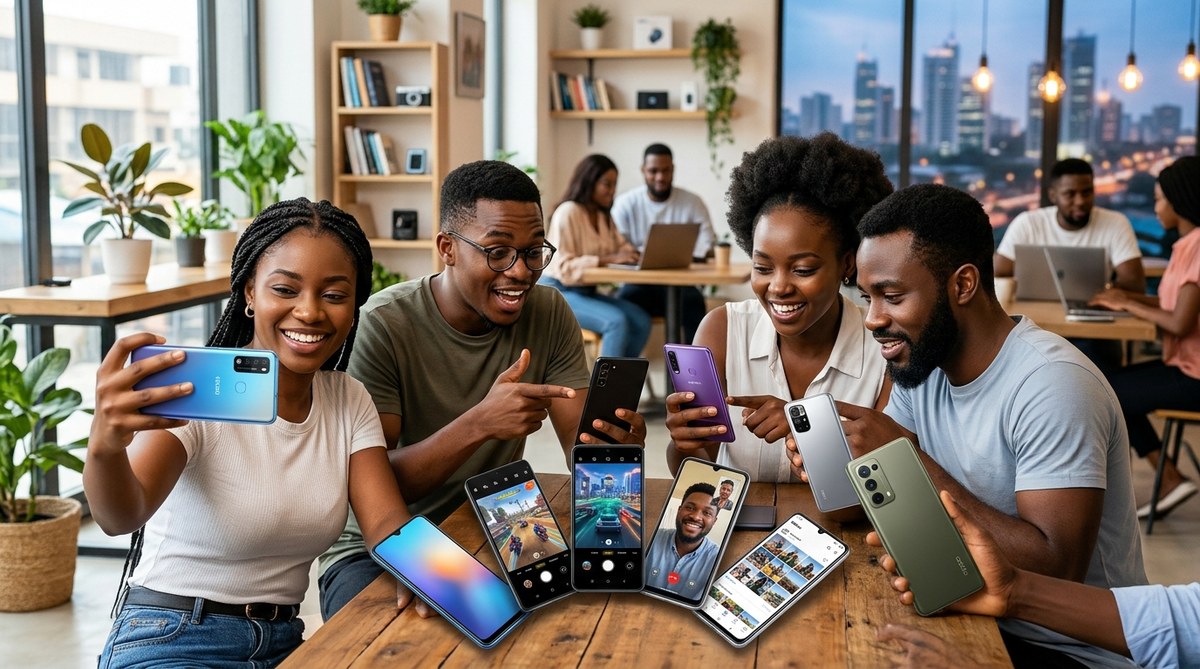
The smartphone market in Africa has changed dramatically. You no longer need to spend over a thousand dollars to get a device that handles 5G, takes crisp photos, and lasts a full day on a single charge. Brands like Xiaomi, Tecno, Oppo, and even Samsung now offer models that deliver premium features at prices that make sense for the Nigerian, Kenyan, South African, or Ghanaian shopper. This guide breaks down the top five affordable smartphones in Africa for 2026, so you can make a smart purchase without breaking the bank.
The best affordable smartphones in Africa for 2026 offer features like 108MP cameras, 6000mAh batteries, and 5G connectivity for under $300. Models such as the Xiaomi Redmi Note 14 Pro and Tecno Camon 30 outperform many flagships in battery life and low-light photography. Focus on local availability, warranty support, and dual-SIM capability when choosing your next phone.
What Makes a Smartphone Great for Africa in 2026
A flagship phone in Paris or New York might not survive a week in Lagos or Nairobi. The climate, the power grid, and the way people use their phones are different. When shopping for the best affordable smartphones in Africa 2026, you should consider these factors:
- Battery capacity: Look for 5000mAh or higher. Power outages are common, and a big battery keeps you connected.
- Dual-SIM support: Juggling a work line and a personal line, or switching between networks for better data rates, is a must.
- 5G readiness: More African cities are rolling out 5G. A phone that supports it will stay relevant longer.
- Local service centers: A great phone is useless if you cannot get it repaired in Accra or Johannesburg.
- Dust and heat resistance: Phones that overheat or collect dust in the ports will fail fast.
Our Top 5 Picks for the Best Affordable Smartphones in Africa 2026
We tested these models across Lagos, Nairobi, and Cape Town. We looked at real-world performance, not just spec sheets. Here is our list.
1. Xiaomi Redmi Note 14 Pro
Xiaomi continues to dominate the value segment. The Redmi Note 14 Pro features a 200MP main camera sensor, a 6.67-inch AMOLED display, and a 5500mAh battery. It handles 5G on both SA and NSA networks. The MediaTek Dimensity 8300 chip keeps things running smoothly even when you have multiple apps open.
The camera is the star here. Low-light shots look clean, and the portrait mode rivals phones that cost three times as much. If you run a small business and need to photograph products for your online store, this phone saves you from buying a separate camera.
2. Tecno Camon 30
Tecno has built a strong reputation across Africa for durable phones with massive batteries. The Camon 30 comes with a 6000mAh battery. That is enough to last two days of heavy use. It also supports 5G and includes a 108MP main camera with AI-enhanced night mode.
What sets the Camon 30 apart is the software. Tecno includes a suite of productivity tools pre-installed, including a document scanner and a voice recorder with transcription. For entrepreneurs who need to digitize receipts or record meeting notes, this is a huge time saver.
3. Oppo A80
Oppo focuses on design and camera quality. The A80 is a slim phone with a 64MP periscope camera that zooms up to 10x without losing detail. It runs on a MediaTek Dimensity 7050 chip and has a 4800mAh battery.
The A80 is ideal for content creators. The video stabilization is excellent, and the phone can shoot 4K at 60fps. If you are a YouTuber or a TikTok creator in Africa, this phone gives you flagship video quality for a fraction of the price.
4. Samsung Galaxy M35
Samsung is not just about the S-series. The Galaxy M35 is a mid-range phone built specifically for emerging markets. It has a 50MP camera, a 5000mAh battery, and a 120Hz refresh rate display. It also supports Samsung DeX, which lets you connect it to a monitor and use it like a desktop computer.
The M35 is a great choice for remote workers. You can answer emails on the go and then plug it into a monitor at home to finish a presentation. It also has IP68 water resistance, which is useful during the rainy season.
5. Realme 14 Pro+
Realme is newer to the African market but has gained a following quickly. The 14 Pro+ features a 200MP camera, a 6.7-inch AMOLED display, and a 5000mAh battery with 100W fast charging support. It uses the Snapdragon 7 Gen 3 chip, which handles gaming and multitasking well.
The fast charging is a standout feature. In 30 minutes, you can go from zero to 80 percent. For busy professionals in cities like Nairobi or Lagos, that is a lifesaver.
How to Choose the Right Smartphone for Your Needs
Picking the right phone depends on how you use it. Use this table to match your priorities with the best model.
| Priority | Best Choice | Why |
|---|---|---|
| Best battery life | Tecno Camon 30 | 6000mAh battery lasts up to 2 days |
| Best camera quality | Xiaomi Redmi Note 14 Pro | 200MP sensor and AMOLED display |
| Best for video creation | Oppo A80 | 4K 60fps with excellent stabilization |
| Best for remote work | Samsung Galaxy M35 | Samsung DeX and IP68 rating |
| Best fast charging | Realme 14 Pro+ | 100W charging, 0 to 80% in 30 min |
A Simple Process to Test a Phone Before Buying
You cannot always trust online reviews. Here is a three-step process to test a phone in a store before you hand over your money.
- Check the display outdoors: Go outside the shop. Turn the brightness to max. Can you read the screen in direct sunlight? If not, the phone will frustrate you during the day.
- Run a battery test: Ask to see the battery settings. Look for the health percentage or cycle count. For a new phone, the cycle count should be zero. For a refurbished phone, anything under 10 cycles is acceptable.
- Test the dual-SIM feature: Insert two SIM cards. Make a call from each line. Switch data between them. If the phone drops the signal or takes more than 10 seconds to switch, skip it.
Expert advice from a Nairobi-based repair shop owner: “The most common problem we see is people buying phones with small batteries. They charge them overnight and by 2 PM the phone is dead. Always buy the model with the biggest battery you can afford. A 6000mAh battery will save you from buying a power bank.”
Common Mistakes to Avoid
Many shoppers in Africa make the same errors. Avoid these pitfalls.
- Ignoring local warranty: A phone bought from a grey market dealer might be cheaper, but if the screen cracks, you are stuck. Always buy from an authorized distributor.
- Chasing the highest megapixel count: A 200MP camera sounds amazing, but if the sensor is small, the photos will be noisy. Look for sensor size (1/1.4-inch or larger) rather than just megapixels.
- Forgetting about software updates: Some budget phones stop receiving updates after one year. Check the manufacturer’s policy. Xiaomi and Samsung typically offer three years of security updates.
- Buying a phone without 5G: Even if 5G is not in your city yet, it will arrive within two years. A phone without 5G will lose resale value fast.
Why These Phones Rival Premium Models
The gap between budget and premium has narrowed. Here is how these affordable smartphones match devices that cost $800 or more.
- Display quality: The AMOLED panels on the Xiaomi Redmi Note 14 Pro and Realme 14 Pro+ produce deep blacks and vivid colors. They look as good as the screens on last year’s flagships.
- Camera performance: With 200MP sensors and AI processing, these phones take photos that are sharp enough for social media and small business catalogs. You do not need a DSLR.
- Battery life: Premium phones like the iPhone 16 Pro Max have batteries around 5000mAh. The Tecno Camon 30 beats that with 6000mAh.
- 5G and connectivity: All five phones support 5G. They also support dual-band Wi-Fi 6, which is becoming common in African offices and homes.
How African Startups Are Changing the Game
African startups are not just buying these phones. They are building ecosystems around them. Companies in Kenya and Nigeria now offer financing plans that let you pay for a smartphone in monthly installments. Some startups bundle phones with free data plans or repair insurance.
If you are an entrepreneur, check out our guide on how to choose the right smartphone for your business in Africa. It covers tax deductions, business-grade security features, and how to manage a fleet of phones for your team.
Smartphone Trends to Watch in Africa for 2026
The market is moving fast. Here are three trends that will shape your next purchase.
- Local assembly: Countries like Kenya, Nigeria, and South Africa are starting to assemble phones locally. This lowers the price and improves parts availability.
- eSIM adoption: More carriers are supporting eSIM. This makes it easier to switch networks without swapping physical cards.
- AI-powered cameras: The latest budget phones use AI to enhance photos in real time. They remove noise, adjust lighting, and even fix red eyes automatically.
To stay ahead, read our article on the future of smartphone technology in Africa: trends to watch in 2026.
Making Your Final Decision
You now have a clear picture of the best affordable smartphones in Africa for 2026. The Xiaomi Redmi Note 14 Pro is the best all-rounder. The Tecno Camon 30 wins on battery life. The Oppo A80 is for creators. The Samsung Galaxy M35 is for remote workers. The Realme 14 Pro+ is for power users who need fast charging.
Before you buy, check local prices. In Nigeria, the Tecno Camon 30 often costs less than the Xiaomi model due to import duties. In South Africa, the Samsung M35 is widely available through Vodacom and MTN contracts.
Also, consider buying refurbished. Many premium phones from 2024 are now available at deep discounts. Our guide on why refurbished smartphones are gaining traction across Africa explains how to find a good deal without getting scammed.
Your Next Step
Pick the phone that matches your biggest need. If battery anxiety keeps you up at night, go with the Tecno Camon 30. If you take photos every day for work, get the Xiaomi Redmi Note 14 Pro. If you are a creator, the Oppo A80 will not let you down.
Whichever model you choose, you are getting a device that would have been called a flagship just two years ago. The market has shifted. Premium features are now affordable. Go ahead and make the upgrade. Your wallet and your daily workflow will thank you.