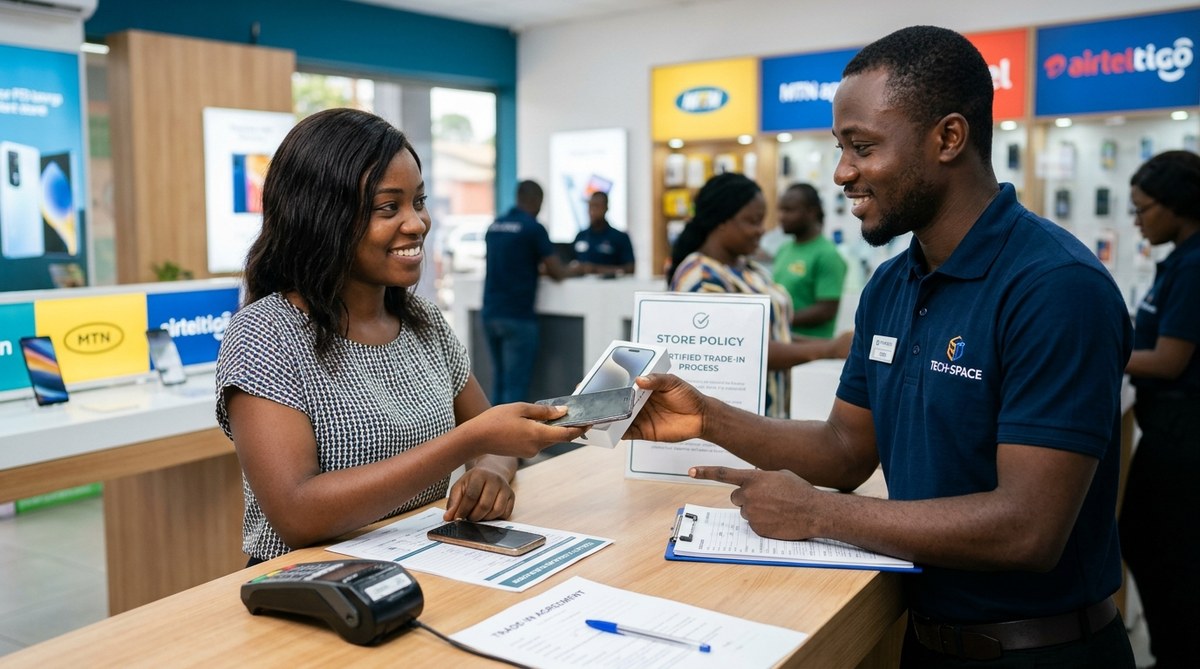
You saved for months. You compared specs. You watched review videos. Now you are ready to upgrade your smartphone. But that old device sitting in your drawer still has value. Trading it in can knock hundreds off the price of a new phone. For many African consumers, that difference means getting a model with more storage, a better camera, or a longer battery life.
The problem is trust. Stories about fake appraisals, swapped phones, and disappearing sellers spread fast on WhatsApp groups. You want to trade in your old phone for a new one without losing money or your device. It is possible. You just need a system.
You can trade in old phone Africa safely by following a checklist: research the fair market value of your device, use platforms with buyer protection, wipe your data completely, meet in safe public locations, and get the trade in value applied before handing over your phone. Scammers rely on rushed decisions. Slow down and verify everything.
Know What Your Phone Is Worth Before You Walk In
Scammers love confusion. If you do not know the value of your phone, they can offer you half of what it is worth. You walk away thinking you got a deal. They walk away with a phone they can resell for double.
Start by checking online marketplaces that operate in your country. Look at listings for your exact model, storage size, and condition. Check at least three sources. Write down the average price. That number is your baseline.
Do not forget about damage. A cracked screen or a weak battery drops the value. Be honest with yourself about the condition. If the phone has issues, find out what repairs cost in your area. Subtract that from the baseline. Now you have a realistic number.
Some platforms offer instant valuations. You enter your phone details and they give you a quote. These tools are helpful, but they often lowball you. Use them as a floor, not the final word.
The Five Step Process for a Safe Trade In
Follow these steps every time. Do not skip any of them. Each one protects you from a different type of scam.
-
Back up and wipe your phone completely. Remove the SIM card and any memory cards. Do a factory reset. On Android, go to Settings > System > Reset. On iPhone, go to Settings > System > Reset > Erase All Content and Settings. Remove your Google or Apple account from the device. If the phone still has your data on it, a scammer can access your bank apps, email, and social media.
-
Meet in a safe location. If you are selling to an individual, choose a busy public place. Coffee shops, malls, and police station parking lots are good options. Some cities have designated online marketplace meetup spots with cameras. Never invite a stranger to your home. Never go to theirs.
-
Inspect the payment method before you hand over the phone. Mobile money transfers can be reversed if the sender reports fraud. Cash is safer but carries its own risks. If you use mobile money, wait until the funds are in your account and you have confirmed them before letting go of the phone. Do not accept screenshots as proof.
-
Get everything in writing. If you are trading in at a store, ask for a receipt that lists the phone model, IMEI number, and the trade in value. Take a photo of the receipt. If the store claims they never received your phone, you have proof.
-
Check the IMEI status. Before you hand over your phone, check the IMEI number online. You want to make sure the phone is not blacklisted or reported stolen. This protects you if the buyer later claims the phone was stolen. You can find the IMEI by dialing *#06# on most phones.
Red Flags That Scream Scam
Your gut feeling matters. If something feels off, walk away. There are plenty of buyers and trade in programs. You do not need to accept a bad deal.
Here are the warning signs to watch for:
- The buyer pressures you to decide fast. They say the offer expires in an hour.
- They insist on meeting in an isolated area.
- They want to take the phone to the back room for testing and come back with a lower offer.
- They offer to pay with a check or a money order you have never heard of.
- They ask for your phone password or PIN.
- They offer well above the market price. If it sounds too good to be true, it is a trap.
- They refuse to give you a written receipt.
Trade In Options Compared
Not all trade in methods are equal. Here is how the most common options stack up against each other.
| Method | Safety Level | Best For | Worst For |
|---|---|---|---|
| Official brand trade in (Samsung, Apple, Xiaomi) | High | Getting a guaranteed price, avoiding scams | Lower value than private sale |
| Licensed refurbisher with physical store | Medium to High | Seeing the phone appraised in person | Limited to specific brands |
| Online marketplace (Jiji, OLX, Facebook) | Low to Medium | Getting the highest price | Risk of theft or fake payment |
| Social media buy and sell groups | Low | Reaching local buyers fast | No buyer protection at all |
| Carrier or network provider trade in | High | Convenience, instant discount | You must buy a new phone from them |
Official brand trade in programs are the safest route. You hand over your old phone at a store or mail it in, and the value goes toward a new purchase. The price is usually lower than what you could get on the open market, but you eliminate almost all risk.
Licensed refurbishers are a good middle ground. Look for stores that have been in business for at least a year and have positive reviews on Google Maps. Visit the store during business hours. Ask to see their workshop if they claim to repair phones.
Online marketplaces can work, but you must be careful. Stick to users with verified profiles and positive feedback. Never ship your phone. Always meet in person.
How to Spot a Fake Appraisal
Some buyers use a trick called the bait and switch. They agree to your price over the phone. When you arrive, they inspect the phone and find problems you did not know existed. Suddenly the offer drops by 40 percent.
This is how to protect yourself.
Take photos of your phone before you leave home. Capture the front, back, sides, and the screen turned on. If the buyer claims there is a crack or a scratch that was not there before, you have proof.
Bring a friend or family member with you. Scammers are less likely to try tricks when there is a witness.
If the buyer lowers the price, you can walk away. You are not obligated to sell. Take your phone and leave.
“The moment a buyer changes the price after seeing the phone in person, you should be suspicious. A legitimate buyer will honor the agreed price if the phone matches the description you gave. If they start pointing out flaws you did not see, ask for your phone back and leave.” — Tech Space Africa community contributor
Prepare Your Phone Like a Pro
A well prepared phone sells faster and for more money. It also signals that you are a serious seller who knows what they are doing. Scammers target people who seem careless.
Clean the phone. Use a microfiber cloth. Remove any stickers or cases. Charge the battery so the phone turns on and shows the home screen.
Remove all accounts. Go to Settings and sign out of Google, Apple, iCloud, and any other services. On Android, remove the Google account first, then do the factory reset. On iPhone, go to Settings > Accounts > Remove Account.
Remove the SIM card. If you have a microSD card for extra storage, take that out too. These are small items that can be lost or stolen during the trade in.
Check for screen damage. Turn the brightness up and look for dead pixels. Run your finger along the edges of the screen to feel for chips. If there is damage, note it honestly when you list the phone.
Where to Trade In Your Phone in Major African Markets
The best trade in option depends on where you live. Here are some options that have built trust in different regions.
In Nigeria, official brand stores like Samsung Experience Stores and Apple authorized resellers offer trade in programs. The value is applied instantly to your purchase. You can also try online platforms like Jiji, but stick to sellers with high ratings.
In Kenya, Safaricom runs a device trade in program for customers upgrading through their network. You get a discount on a new phone and the old one is recycled responsibly.
In South Africa, stores like Makro, Game, and Incredible Connection have trade in desks. You bring your phone, they appraise it in front of you, and the value goes toward anything in the store.
In Ghana and Uganda, the market is more informal. Your best bet is a licensed refurbisher with a physical shop. Ask around in tech forums or Facebook groups for recommendations. Word of mouth is powerful in these markets.
For a broader look at the best devices to consider after your trade in, check out our list of top 10 budget smartphones dominating the African market in 2026. It covers models that offer great value for the price.
What to Do If You Get Scammed
Even with precautions, scams happen. If you lose your phone or money, act fast.
Contact your mobile money provider immediately. If you paid via M-Pesa, MTN Mobile Money, or Orange Money, report the transaction. They may be able to freeze the payment if you act within a few hours.
File a police report. Go to the nearest station with any evidence you have: screenshots of messages, photos of the buyer, receipts, and the IMEI number of the phone. The IMEI is critical. If the phone is reported stolen, the police can flag it in the database. That makes it harder for the scammer to resell.
Report the user on the platform where you connected. Jiji, OLX, and Facebook all have reporting systems. Even if you do not get your phone back, your report can protect the next person.
Share your story in local tech groups. Warning others is a powerful way to fight back. Many scams rely on victims staying silent out of embarrassment.
Your Data Is More Valuable Than the Phone
Think about what is on your phone right now. Bank apps. Mobile money PINs. Photos of your ID card. Emails with passwords. Chat history.
When you trade in a phone, you are handing over a device that contains your digital life. If the buyer is a scammer, they may not care about the phone at all. They want your data.
That is why the factory reset is not optional. It is the most important step.
After the reset, check that the phone boots up to the setup screen. It should ask for a language and a Wi-Fi network. If it goes straight to the home screen, the reset did not work. Do it again.
Some phones have a feature called “Encrypt and Erase” that overwrites the storage with random data. If your phone has this option, use it. It takes longer but makes recovery impossible.
For extra safety, remove the memory card if your phone has one. Format it on a computer before you sell the phone.
The Real Cost of a Bad Trade In
Let us talk about numbers. A two year old phone in good condition might be worth 40 to 60 percent of its original price. If you trade it in without doing your research, you might get only 20 percent.
That difference matters. On a phone that originally cost $400, the gap between a fair trade in and a bad one is $80 to $160. That is enough to buy a pair of good wireless earbuds or a protective case and screen protector for your new device.
Time is also a cost. If you get scammed, you lose the time spent negotiating, traveling, and filing reports. That time could have been used to find a legitimate buyer.
A safe trade in takes a few hours of preparation. A scam can cost you days of frustration.
Building Trust in Africa’s Growing Phone Resale Market
The phone resale market in Africa is growing fast. More people are buying used and refurbished phones because they offer better value. Startups are building platforms to make these transactions safer.
As the market matures, we will see more standardized trade in programs, better buyer protection, and clearer pricing. But for now, the responsibility falls on you as the seller.
You can be part of the solution. When you have a good trade in experience, leave a review. Recommend the buyer to friends. When you have a bad experience, report it. Your feedback helps build a database of trustworthy and untrustworthy players.
For a deeper look at how this market is evolving, read about how African startups are building a smartphone resale economy that rivals new phone sales in 2026. It explains the forces driving change across the continent.
Your Trade In Checklist
Print this or save it on your phone. Go through it before every trade in.
- Research the market value of your phone
- Take photos of the phone from all angles
- Back up your data
- Factory reset the phone
- Remove SIM and memory cards
- Check the IMEI status
- Choose a safe meeting location
- Bring a friend
- Confirm payment before handing over the phone
- Get a written receipt
- Walk away if the price changes
Trade In With Confidence
You do not need to be an expert to trade in your old phone safely. You just need a process. Know your value. Prepare your device. Meet in safe places. Verify payment. Walk away from pressure.
The phone in your pocket is worth real money. Treat the trade in like any other financial transaction. Do your research, protect your data, and trust your instincts.
Upgrading should feel exciting, not stressful. With these steps, you can hand over your old phone and walk away with a new one, knowing you got a fair deal and kept your information safe.
If you are still deciding which phone to buy next, our guide on how to choose the right smartphone for your business in Africa can help you match features to your daily needs.