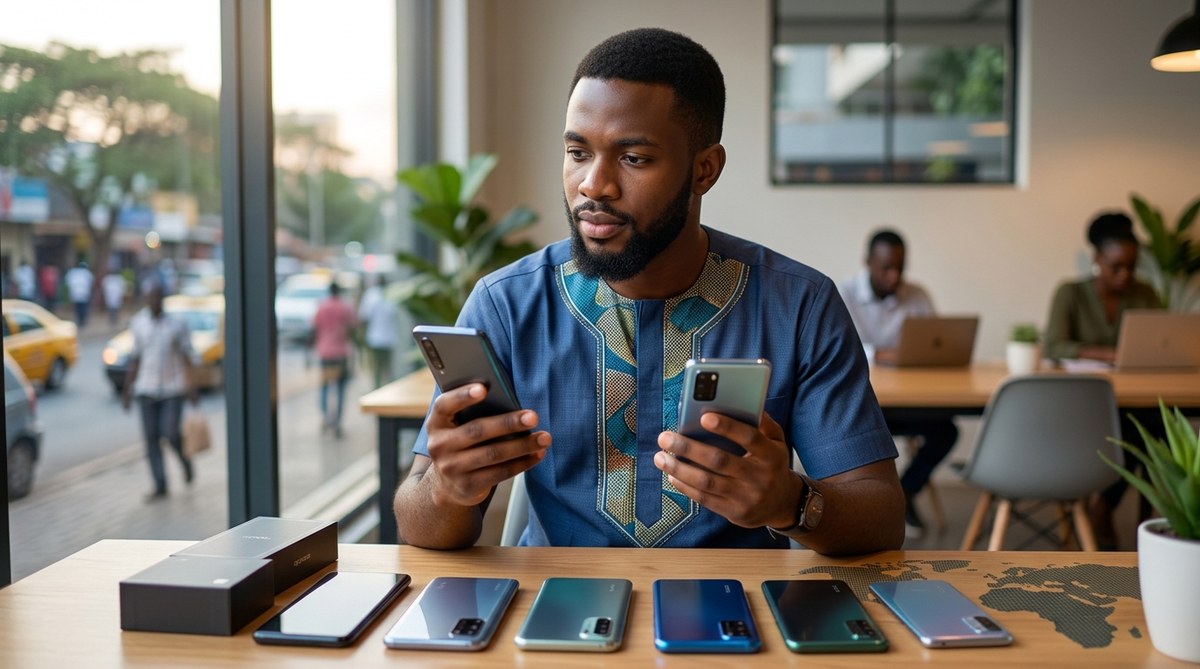
If you live in Lagos, Nairobi, or Accra, chances are you own a smartphone from a Chinese brand. Tecno, Infinix, Xiaomi, and Huawei are everywhere. But a nagging question sticks: can you actually trust them with your data, your money, and your daily life? It is a fair concern. News reports about spyware, government backdoors, and opaque supply chains can make anyone nervous. In 2026, the answer is not a simple yes or no. It depends on which brand, which model, and how you use it.
Chinese brands dominate Africa’s smartphone market with affordable, locally tailored devices. Trust depends on data security, software updates, and transparency. In 2026, Tecno, Infinix, Xiaomi, and Huawei have improved encryption and privacy policies. This guide evaluates their practices and hardware to help you decide which Chinese smartphone deserves your trust.
Why This Question Matters in 2026
Chinese smartphone brands now account for more than 60% of device sales across sub-Saharan Africa. That number keeps growing. For many people, a Tecno or Infinix is the first phone they ever owned. The stakes are high because these phones handle everything from mobile money to work emails. If a device leaks your banking credentials or lets an app read your private messages, the damage is real.
In 2026, governments in Kenya, Nigeria, and South Africa have started requiring stronger data protection from manufacturers. The landscape is changing. Brands that once ignored privacy now advertise their security features. But trust is not automatic. You have to look past the marketing.
What the Major Chinese Brands Offer
Each brand has a different approach to security and quality. Here is a quick look.
Tecno focuses on local features, like deep integration with African payment systems and camera tuning for darker skin tones. Its HiOS skin includes a privacy dashboard that shows which apps access your camera and microphone. The tradeoff is that budget models sometimes lag behind on Android security patches.
Infinix targets younger users and gamers. Its XOS interface has a built-in firewall and app locker. Infinix devices typically get updates every three to four months, which is better than some competitors but slower than what Google recommends.
Xiaomi offers excellent hardware for the price, with MIUI providing extensive privacy controls like a second space for sensitive apps. Xiaomi has been criticized for ad placements in its system apps, but in 2026 the company has toned that down for African markets. Flagship models receive regular updates; budget ones do not.
Huawei remains a premium choice, but the absence of Google Mobile Services means you rely on Huawei’s AppGallery and third-party stores. That can be a security risk if you download apps from unofficial sources. On the upside, HarmonyOS includes strong encryption and a detailed permission manager.
Data Privacy and Security Concerns
The biggest worry is always data collection. In the past, researchers found that some Chinese smartphones sent user data to servers in China without clear consent. Tecno and Infinix responded by publishing privacy policies in local languages and adding opt-out toggles for data sharing. Xiaomi now allows European-style data control for African users. Huawei’s software does not send telemetry to Google, but it does communicate with Huawei’s cloud.
Another concern is government backdoors. No credible evidence has surfaced that any of these brands install hidden surveillance tools for foreign governments. But the risk of state sponsored intrusion is higher for Huawei because of ongoing trade tensions. For everyday users, the practical threat is more mundane: poorly configured apps that eat your data and drain your battery.
Hardware Quality and Software Updates
Chinese smartphones are often praised for their robust batteries and dual SIM support. However, build quality varies. A $100 Tecno Spark may have a plastic body that cracks after a drop, while a Xiaomi Redmi Note series feels solid for years. Software updates are the real differentiator. Most budget Android phones from any brand stop getting patches after two years. Chinese models are no exception.
The table below compares key trust factors across the four brands.
| Brand | Data Encryption | Update Frequency | Privacy Features | Hardware Quality | Price Range |
|---|---|---|---|---|---|
| Tecno | Good | Every 4-6 months | Dashboard, app locker | Fair (budget) | $80 – $250 |
| Infinix | Good | Every 3-4 months | Firewall, app locker | Fair (midrange) | $90 – $220 |
| Xiaomi | Strong | Monthly (flagships), quarterly (budget) | Second space, ad controls | Good | $100 – $600 |
| Huawei | Strong | Monthly (flagships), sporadic (older) | Permission manager, encryption | Excellent | $200 – $1000 |
How to Evaluate Trust for Yourself
You do not need to be a security expert. Follow these steps before you buy.
-
Check the official privacy policy on the brand’s website. Look for clear language about what data is collected, where it is stored, and how long it is kept. If the policy is vague or hard to find, consider that a red flag.
-
Look for Android Enterprise Recommended certification or similar. This program requires devices to meet security standards and deliver updates on time. Some Xiaomi and Huawei models qualify; few Tecno or Infinix ones do.
-
Review the update history for the exact model you want. Search online forums or tech sites for mentions of software updates. A model that received a security patch in the last three months is a good sign.
-
Search for independent security audits or teardowns. Tech channels sometimes test how much data a phone sends home. If the model you like has been tested and found clean, that is strong evidence.
-
Ask in local tech communities on WhatsApp, Telegram, or Reddit. Real users will tell you about bugs, battery drain, and any suspicious behavior they have noticed.
Practical Tips for Staying Secure
Once you own a Chinese smartphone, these habits will keep your data safer.
- Always install system updates as soon as they appear. Do not postpone them.
- Use a VPN when connecting to public Wi-Fi at cafes, airports, or hotels.
- Disable permissions for apps that do not need them. For example, a flashlight app should not have access to your contacts.
- Download apps only from the official Google Play Store or the brand’s app store. Avoid sideloading unknown APK files.
- Consider using a separate user profile for work or sensitive tasks. Most Android phones allow multiple profiles.
Expert Advice
“The biggest risk with budget Chinese smartphones is not malicious backdoors, but delayed security patches. The average user keeps a phone for two to three years, yet many budget models stop receiving updates after 18 months. That is a window for attackers. Choose models that promise at least two years of security updates, and you can trust them as much as any other phone.”
— Dr. Aisha O., cybersecurity researcher at the African Center for Digital Trust
Making Your Choice with Confidence
Trust is not a single attribute. It is built on encryption, update promises, and the habits you adopt. Chinese smartphones have come a long way in Africa. They now offer features that global brands ignore, like longer battery life and support for local payment apps. The key is to pick a model that matches your security needs. If you prioritize privacy, a Xiaomi Redmi Note or Huawei P series is a solid bet. If you need something simple and affordable, a Tecno Spark with regular updates can serve you well.
Check your next phone against the steps above. Ask the seller about update history. Read the privacy policy. And once you have it, follow the security tips. That way, you get the value of a Chinese smartphone without sacrificing your peace of mind. For more guidance, see our recommendations on top budget smartphones dominating the African market in 2026 and how to protect your smartphone from cyber threats in Africa in 2026. Your next great phone is out there. You just need to choose it wisely.