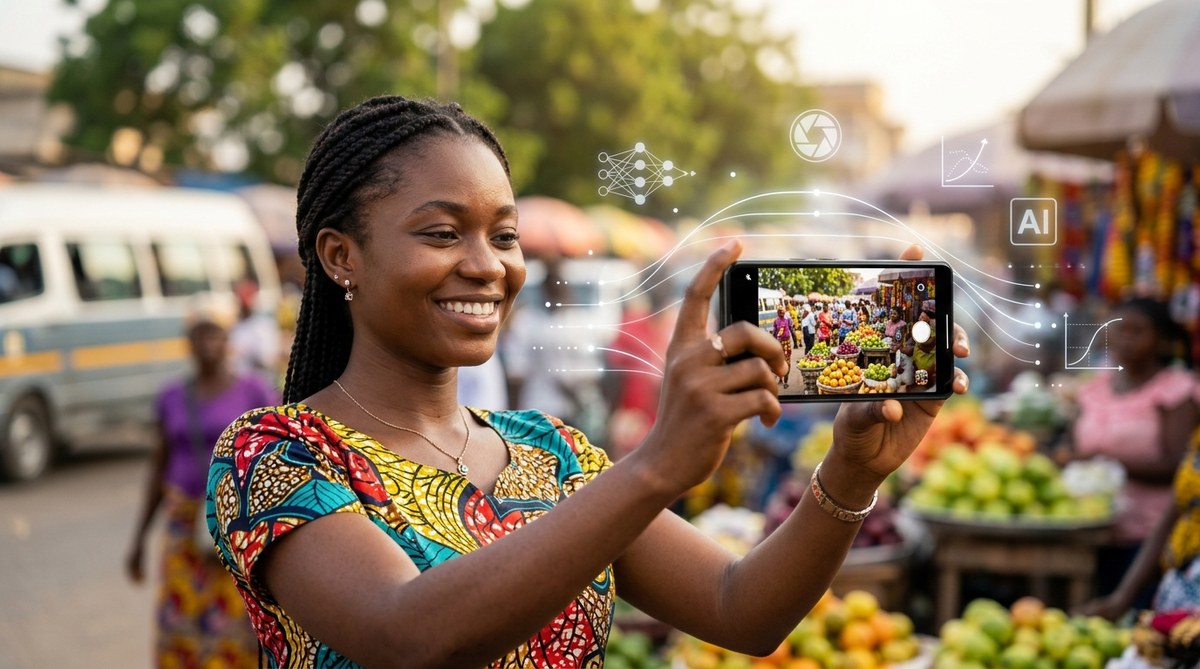
Your smartphone camera has gotten a serious upgrade. And it is not just about more megapixels. Across Africa, a quiet revolution is happening inside the phones you carry every day. Artificial intelligence is now the secret sauce that makes your selfies pop, your portraits look professional, and your night shots actually visible. Brands like TECNO, Infinix, and Samsung are not just selling hardware anymore. They are selling software that understands you.
AI powered cameras are now the standard for smartphone photography in Africa. Local brands lead the charge with features that correct skin tone accuracy, improve low light selfies, and optimize portrait modes for melanin rich skin. Understanding how these systems work helps you pick the right phone and take better photos without expensive gear.
Why African Markets Need Custom AI Cameras
Global smartphone brands used to design cameras for lighter skin tones and well lit studios. That left many African users with washed out faces, blown out highlights, and muddy night shots. The problem was clear: one size does not fit all.
African skin has a wide range of melanin levels. Standard algorithms trained on predominantly Caucasian faces often fail to capture the richness of darker complexions. They overexpose the image, flatten facial features, or create an unnatural orange tint.
That is where AI camera smartphones Africa finally started to change the game. Local brands realized they had to build their own datasets. They collected thousands of images of African faces in different lighting conditions. They trained their neural networks to recognize and enhance melanin rich skin without washing it out.
Today, a phone like the TECNO Camon 20 or the Infinix Zero 30 can detect your skin tone in real time. It adjusts the white balance, exposure, and color mapping to make you look like you. Not like a filtered version of someone else.
How AI Improves Low Light Selfies
Low light is the enemy of a good selfie. Indoors, at a braai, or under a dim streetlamp, most phones produce grainy, dark images. AI fixes that in three key ways.
1. Scene Recognition and Adaptive Exposure
The camera analyzes the scene before you press the shutter. It looks for faces, background light sources, and shadows. Then it adjusts the exposure curve specifically for your face. If you are standing against a bright window, the AI brings down the background exposure while lifting the shadows on your face. This is called local tone mapping.
2. Multi Frame Fusion
Instead of taking one photo, the camera captures several frames in a fraction of a second. The AI stacks them together. It keeps the sharpest parts of each frame and discards the blurry or noisy ones. The result is a selfie with less grain and more detail, even when the light is low.
3. AI Based Noise Reduction
Traditional noise reduction makes photos look soft or plastic. AI driven noise reduction is smarter. It distinguishes between actual image detail and random noise. It removes the noise while keeping skin texture, hair strands, and fabric patterns intact. Your selfie stays sharp, not smeared.
| AI Feature | What It Does | Why It Matters for African Users |
|---|---|---|
| Skin tone detection | Maps melanin levels across the face | Prevents washed out or orange skin tones |
| Multi frame fusion | Combines several shots into one | Reduces grain in low light selfies |
| Local tone mapping | Adjusts exposure for face vs background | Keeps your face visible against bright sun or dark rooms |
| AI portrait segmentation | Separates subject from background | Creates natural bokeh without cutting off edges of hair |
| Adaptive white balance | Corrects color temperature per scene | Avoids yellow or blue tints on darker skin |
Skin Tone Accuracy Is the Real Breakthrough
For years, smartphone cameras struggled with darker skin tones. The algorithms were biased. They were trained on datasets that did not represent the global population. The result was a technology that worked well for some and poorly for others.
In 2026, that has changed. TECNO, for example, developed a system called Universal Tone. It uses a multi skin tone restoration engine that maps over 268 skin tone shades. When you take a selfie, the AI identifies your specific shade and applies color corrections that preserve your natural undertones.
Samsung has also stepped up. Their Galaxy A series, popular across Nigeria, Kenya, and South Africa, now includes an AI enhanced portrait mode that recognizes facial structure common in African features. It does not just blur the background. It adjusts the lighting on your face to create a three dimensional look.
Infinix took a different approach. They partnered with local photographers and makeup artists to build a training dataset that includes African skin under harsh sunlight, indoor fluorescent lights, and candle lit rooms. The result is a camera that handles mixed lighting without turning your face orange or grey.
“The biggest mistake global brands made was assuming one algorithm fits all. African consumers want to see their real skin tone in photos. Not a corrected version of it.” — Mobile imaging engineer at TECNO, 2026
Portrait Modes That Actually Work
Portrait mode used to be a gimmick. The edges were jagged. The blur looked fake. Hair was cut off at random. AI has changed that too.
Modern AI camera smartphones Africa now use depth sensing through software alone. The neural network identifies the subject, the foreground, and the background. It creates a depth map pixel by pixel. When it applies the blur, it knows exactly where your hair ends and the background begins.
Some phones even offer studio lighting effects. You can choose from natural, warm, or dramatic lighting. The AI simulates the direction and intensity of light on your face. It adds catchlights to your eyes and softens shadows under your chin. It looks like you hired a photographer, but you are just standing in your living room.
A Practical Guide to Taking Better AI Selfies
You do not need to be a photographer to get great results. Follow these steps to make the most of your phone’s AI camera.
-
Clean your lens. It sounds simple, but a smudge ruins the AI analysis. Wipe it with a soft cloth before every shot.
-
Use the AI scene optimizer. Most phones have a toggle for AI enhancement. Keep it on. It adjusts settings automatically based on what the camera sees.
-
Position your face toward the light. AI works best when it has good data. Natural window light is ideal. If you are indoors, face a lamp rather than standing under it.
-
Hold still for a second. Multi frame fusion needs multiple captures. If you move too early, the frames do not align and the AI cannot stack them properly.
-
Edit minimally. The AI already corrected skin tone and exposure. Adding heavy filters can undo that work. Use a light touch.
What to Look for When Buying an AI Camera Smartphone
Not all AI cameras are created equal. Here are the features that matter most for African users.
- Dedicated night mode for selfies. Not all phones have this. Check if the front camera supports night mode with AI enhancement.
- Skin tone calibration. Look for brands that advertise multi tone or universal tone systems.
- Portrait mode with edge detection. Read reviews that show examples with natural hair and complex backgrounds.
- AI video stabilization. If you shoot video, AI stabilization makes a huge difference for walking shots or vlogs.
For a full list of current models, check out our guide on top 10 budget smartphones dominating the African market in 2026. You will find options that balance AI camera quality with price.
Common Mistakes People Make with AI Cameras
Even with smart software, you can get bad results if you fight the system.
- Turning off AI enhancement. Some users think AI makes photos look fake. In 2026, the opposite is true. AI correction is what makes skin tones accurate.
- Using digital zoom. AI cannot fix digital zoom. It just enlarges pixels. Step closer instead.
- Shooting in direct noon sun. The AI can handle high contrast, but harsh shadows are hard to fix. Find shade or shoot during golden hour.
- Ignoring software updates. Phone makers release camera improvements through updates. If you do not update, you miss new AI models.
How AI Cameras Fit Into the Bigger Picture
AI camera smartphones Africa are not just about better selfies. They are part of a larger shift in how technology serves local markets. African consumers are demanding products built for them, not adapted from elsewhere. That demand is driving innovation.
Brands that listen are winning. TECNO and Infinix have captured significant market share because they invested in local R&D. They built teams in Lagos, Nairobi, and Cairo. They studied how people actually use their phones. Then they designed AI that works in real conditions.
Samsung followed suit. Their mid range devices now include region specific camera tuning. It is a recognition that the African market is too large to ignore.
If you are a content creator, a small business owner, or just someone who loves taking photos, this matters. You no longer need a flagship phone to get professional looking shots. A mid range device with strong AI can deliver results that rival much more expensive gear.
The Road Ahead for AI Photography in Africa
The next few years will bring even more advanced features. Expect AI that can remove unwanted objects from photos, generate realistic backgrounds, and adjust lighting after the shot is taken. Some phones already offer AI editing tools that let you change facial expressions or open closed eyes.
Local startups are also getting involved. New companies are building AI camera apps specifically for African users. They focus on beauty standards that reflect local preferences rather than imported ideals.
For entrepreneurs and creatives, this is an opportunity. Better cameras mean better content. Better content means better engagement on social media, stronger brand presence, and more sales. If you run a business, your smartphone is now a professional tool.
Learn more about how African consumers are shaping the future of smartphone innovation in 2026. The trends are clear: local needs drive global change.
Your Camera Is Smarter Than You Think
You already have a powerful tool in your pocket. The AI inside your phone is working every time you take a photo. It is analyzing light, detecting faces, and correcting colors in milliseconds. The more you understand how it works, the better you can use it.
Next time you take a selfie, pay attention to what the camera does. Watch the screen adjust. Notice how the exposure changes. That is AI doing its job. And it is only getting better.
For more insights on mobile technology in Africa, check out our piece on emerging smartphone features transforming connectivity in Africa. The future is already here. You just need to know where to look.