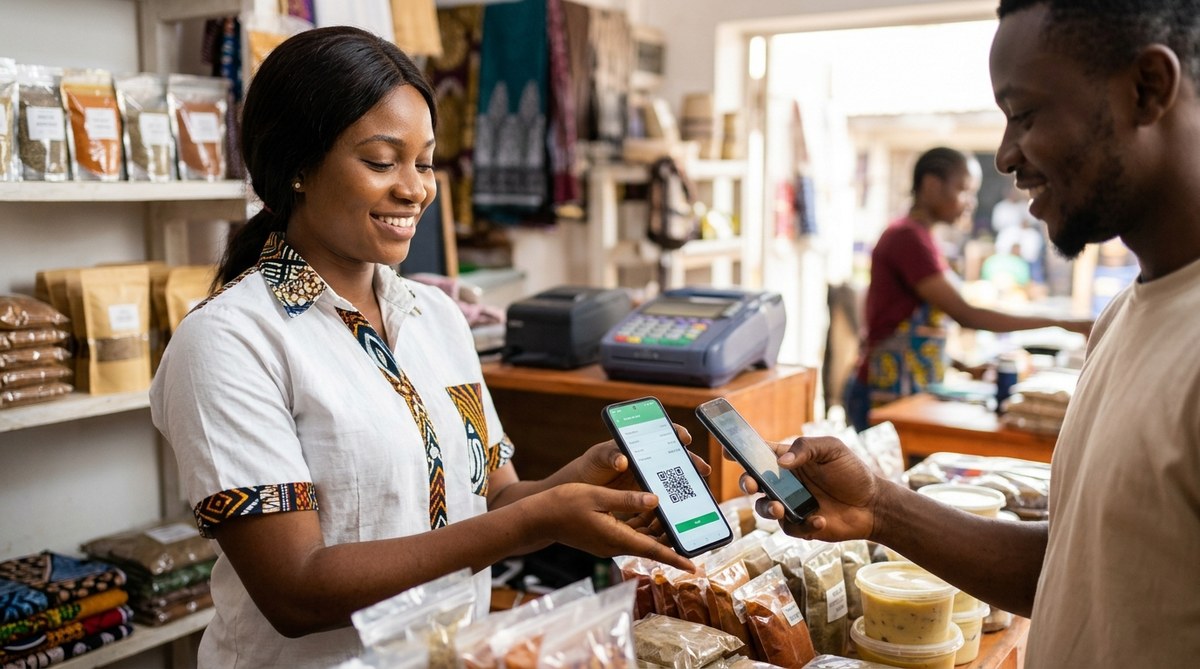
The dusty credit card machine, the bulky terminal that needs a landline, the expensive monthly rental fee. For decades, that was the only way a business could accept card payments. But across Africa, a new generation of startups is proving you do not need any of that hardware. You just need a smartphone.
These startups are turning the device in your pocket into a complete point of sale system. They are bypassing the traditional banking infrastructure that never fully reached small shops, market stalls, and mobile vendors. In 2026, this shift is not a niche experiment. It is a full blown movement that is reshaping commerce from Lagos to Nairobi to Cape Town.
African startups are replacing expensive POS terminals with smartphone based systems that use NFC, QR codes, and mobile money. This cuts hardware costs by over 80% and lets vendors accept payments anywhere. In 2026, the market is growing fast, driven by high smartphone penetration and a lack of traditional banking infrastructure. For investors, this is one of the most promising fintech opportunities on the continent.
The Old POS Model Was Never Built for Africa
Traditional point of sale systems come with a lot of baggage. They require a stable internet connection, a reliable power supply, and a merchant account from a bank. Many of these banks charge high monthly fees and demand lengthy contracts. For a small business owner in a market in Accra or a vendor on a busy street in Dar es Salaam, those requirements are impossible to meet.
The result? Most transactions in Africa have been cash only for decades. That is changing now.
Smartphones are everywhere. According to recent data, over 60% of adults in Sub-Saharan Africa own a smartphone, and that number is climbing. These devices come with built in NFC chips, high quality cameras, and powerful processors. They can do everything a dedicated POS terminal can do, and often more.
How Smartphone POS Systems Actually Work
The technology behind smartphone POS systems is simpler than you might think. Here is the basic process that most of these apps follow:
- A merchant downloads a payment app and creates an account. The app links to their bank account or mobile money wallet.
- The customer selects an item and chooses a payment method. This could be a credit card, a debit card, or a mobile money service like M-Pesa.
- The merchant enters the amount on their smartphone. If the customer has a card, they tap it against the phone’s NFC reader. If they are using mobile money, the app generates a QR code.
- The payment is processed through the app’s backend. The merchant receives a confirmation in seconds.
- A digital receipt is sent to the customer via SMS or email. No printer needed.
That is it. No separate terminal. No extra hardware. Just a smartphone and an app.
Why This Model Is Winning in 2026
Several factors are driving the adoption of smartphone POS systems across Africa right now.
- Cost savings: A traditional POS terminal can cost $200 to $500 upfront, plus monthly fees. A smartphone POS app costs nothing to download and charges a small per transaction fee.
- Mobility: Vendors can accept payments anywhere. A farmer at a roadside stand, a tailor at a market, a taxi driver in traffic. The phone goes with them.
- No bank account needed: Many of these apps integrate directly with mobile money wallets. A merchant does not need a traditional bank account to start accepting digital payments.
- Security: Smartphone POS apps use encryption and tokenization. They are often more secure than older magnetic stripe terminals.
- Ease of use: The apps are designed for anyone to use. You do not need technical training.
A Look at the Leading Players
Several African startups are leading this charge. Each one has a slightly different approach, but they all share the same core idea: use the smartphone as the payment terminal.
| Startup | Country | Key Feature | Target Market |
|---|---|---|---|
| Yoco | South Africa | Card reader that plugs into a phone jack | Small retail shops and restaurants |
| Paga | Nigeria | QR code based payments | Market vendors and informal sellers |
| M-Pesa | Kenya | Mobile money with merchant QR codes | Rural and urban small businesses |
| Flutterwave | Nigeria | Unified payment gateway with smartphone tools | E-commerce and in person sales |
| Cellulant | Kenya | Mobile POS with offline mode | Areas with unreliable internet |
These companies are not just competing with traditional POS providers. They are creating a new category of payment infrastructure that is designed specifically for the African market.
“The smartphone is the most powerful financial tool most Africans will ever own. We are just scratching the surface of what it can do for commerce.” – Fintech founder based in Nairobi
The Numbers Tell the Story
The market for smartphone POS systems in Africa is growing at an impressive rate. In 2025, the total value of transactions processed through smartphone based POS systems in Africa was estimated at over $15 billion. Projections for 2026 show that number could reach $25 billion.
Several factors are fueling this growth:
- Smartphone penetration continues to rise. More people own a phone than a bank account.
- Mobile money services like M-Pesa, Airtel Money, and Orange Money are becoming more popular. They create a natural ecosystem for smartphone POS apps.
- Governments are pushing for digital payments to reduce cash dependency and improve tax collection.
- The cost of data and smartphones is dropping. Even budget devices can run these apps smoothly.
Three Practical Steps to Get Started
If you are an entrepreneur or business owner looking to adopt a smartphone POS system, here is a simple roadmap.
- Choose your platform. Look at the options available in your country. Consider transaction fees, supported payment methods, and ease of use. Most offer free trials.
- Set up your device. Download the app, create your merchant profile, and link your bank account or mobile money wallet. Test the system with a small transaction.
- Train your staff. Show them how to enter amounts, process refunds, and handle common issues. The best apps have simple interfaces that require minimal training.
Common Mistakes to Avoid
Even though smartphone POS systems are simple, there are still pitfalls. Here are the most common ones and how to avoid them.
- Poor internet connection: Some apps work offline and sync later. Choose one that does if you operate in an area with spotty connectivity.
- Security lapses: Keep your phone locked and use two factor authentication. Do not share your merchant login credentials.
- Ignoring fees: Compare transaction fees carefully. Some platforms charge a flat rate, others take a percentage. The difference adds up.
- Not having a backup: Carry a second phone or a simple QR code printout in case your phone runs out of battery.
What Investors Should Watch
For tech investors, the smartphone POS space in Africa is full of opportunity. Here are a few trends to keep an eye on.
- Integration with other services: The best apps are not just payment terminals. They also offer inventory management, sales analytics, and customer loyalty programs. Look for startups that are building full business toolkits.
- Offline capabilities: The ability to process transactions without an internet connection is a huge advantage in rural areas. Startups that solve this problem will capture a large market.
- Partnerships with telecoms: Mobile network operators are natural partners. They already have millions of mobile money users. Startups that partner with them can grow fast.
- Regulatory changes: Many African governments are updating their digital payment regulations. A startup that can navigate this landscape and stay compliant will have a strong moat.
The Road Ahead for Smartphone Payments
The shift from traditional POS terminals to smartphone based systems is not a temporary trend. It is a fundamental change in how commerce works in Africa. For the first time, a street vendor can accept the same payment methods as a large supermarket. A farmer can sell produce directly to a buyer and get paid instantly. A taxi driver can take a card payment without needing a machine.
This is financial inclusion in action. It is not about building banks. It is about giving people the tools they already have and making them work harder.
If you are looking for best smartphones for African entrepreneurs in 2026, you will find that even mid range models now come with the NFC and processing power needed for these POS apps. And if you want to understand the broader landscape, the article on how fintech innovations are transforming small business payments in Africa offers a deeper look at the ecosystem.
Your Next Move
The evidence is clear. Smartphone POS systems are not just a workaround. They are the future of payment infrastructure in Africa. For business owners, the path forward is simple. Pick an app, set it up, and start accepting digital payments today. For investors, the time to pay attention is now. This market is growing fast, and the companies that are building the infrastructure today will define commerce in Africa for the next decade.
Take a look at the options available in your region. Test a few apps. See which one fits your workflow. The transition from cash to digital payments does not have to be complicated. It can start with the phone in your pocket.