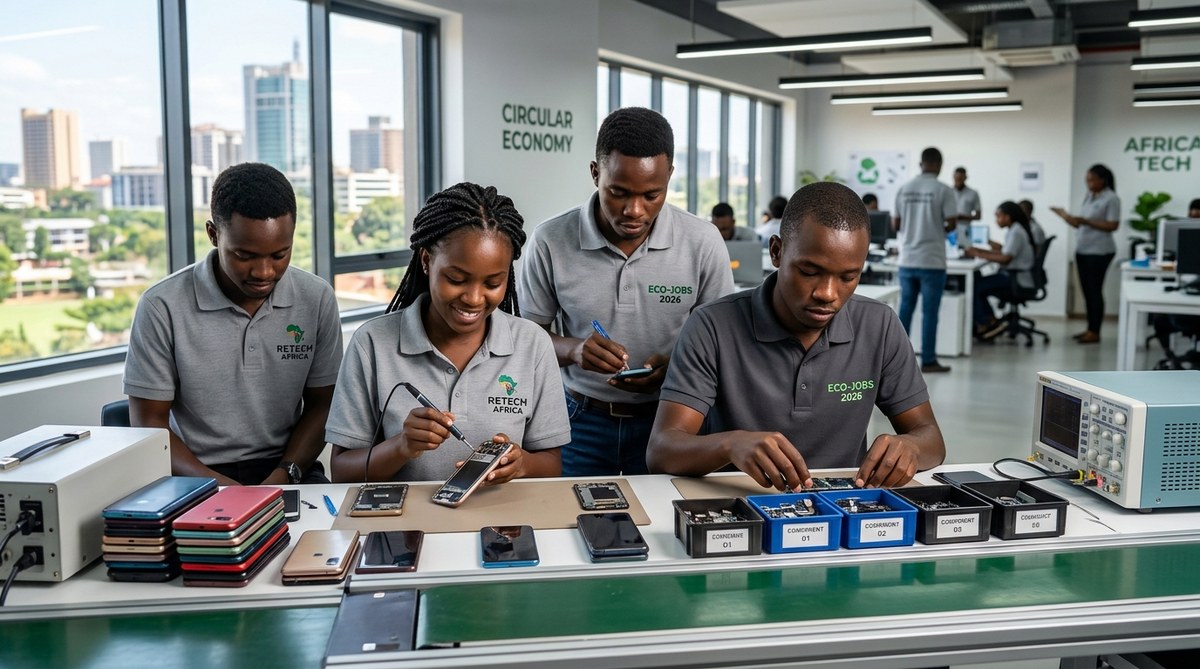
The first time I watched a young technician in Nairobi pull a working logic board from a phone most people would throw away, I saw the future of African employment. That single board, salvaged from a pile of cracked screens and dead batteries, would end up powering a refurbished device for a student who could not afford a new one. And the technician? He earned a month’s rent from that one repair session. This is not a small story. It is a continent wide shift.
Smartphone recycling in Africa has evolved from a side hustle into a structured industry that employs thousands of people in 2026. From collection agents to data sanitization specialists, the e-waste sector offers stable income, technical training, and a path out of poverty. This article breaks down how the job market works, what skills are in demand, and how you can get involved or invest in this growing field.
The Scale of the Opportunity
Africa receives millions of used smartphones every year. Many arrive through trade, donations, or personal imports. A large number still work. Others need minor repairs. And the ones that cannot be fixed contain valuable materials like gold, copper, and rare earth metals.
In 2026, the numbers are staggering. The continent now processes over 12 million phones annually through formal and informal recycling channels. That number is growing as more people upgrade to newer models. Each phone that enters the recycling stream creates a job. Sometimes several jobs.
The old approach of dumping e-waste in landfills is fading. Governments across Kenya, Nigeria, Ghana, and South Africa have tightened regulations. They now require responsible disposal. This legal pressure has pushed the industry to professionalize. And professionalization means jobs.
How the Job Market Works
Let me walk you through the actual process. A smartphone does not go straight from your hand to a recycling machine. It passes through many hands. Each step creates work.
- Collection and aggregation Local collectors gather phones from individuals, repair shops, and businesses. They sort devices by model and condition. This is often the entry level role. No technical skill required, just reliability and a way to transport goods.
- Grading and testing Trained technicians inspect each phone. They test screens, batteries, cameras, and connectivity. They assign a grade: working, repairable, or parts only. This step needs basic electronics knowledge. Many workers learn on the job.
- Data wiping and sanitization This is a critical step. Phones contain personal data. Specialists use software to erase all information securely. Some companies also physically destroy storage chips for high security clients. This role pays well and requires certification.
- Repair and refurbishment Skilled repairers replace screens, batteries, charging ports, and speakers. They turn a broken phone into a working device. These workers are the backbone of the industry. They often start as apprentices.
- Material recovery For phones that cannot be saved, recyclers extract metals and plastics. This is industrial work. It involves shredders, chemical baths, and smelting furnaces. It is also where the highest value materials are recovered.
Each of these five stages represents a distinct career path. And the industry is hungry for workers at every level.
Skills That Pay the Bills
You do not need a university degree to work in smartphone recycling. But you do need specific skills. Here is what employers are looking for in 2026.
- Basic electronics knowledge. Understanding how a phone is assembled helps with disassembly and repair.
- Data security awareness. Knowing how to wipe a phone properly is a specialized skill that commands higher pay.
- Customer service. Collectors and graders interact with the public. Friendly communication matters.
- Logistics and inventory management. Tracking thousands of phones requires organization.
- Sales and marketing. Refurbished phones need buyers. People who can sell are always in demand.
Many training programs now exist across the continent. Social enterprises and private companies offer short courses. Some are free. Others cost a small fee. The return on investment is fast. A three week course in phone repair can lead to a job within a month.
A Closer Look at the Numbers
Let me share a table that shows the typical job roles and what they pay in different regions. These figures are based on 2026 market data from formal recycling centers in Kenya, Nigeria, and South Africa.
| Job Role | Typical Monthly Income (USD) | Training Required | Growth Potential |
|---|---|---|---|
| Collection Agent | $150 – $250 | None | High (can become team lead) |
| Phone Grader | $200 – $350 | 1 week course | Medium |
| Data Sanitization Specialist | $300 – $500 | Certification required | High (growing demand) |
| Repair Technician | $400 – $700 | 3 month apprenticeship | Very high |
| Material Recovery Operator | $250 – $450 | On the job training | Medium |
The numbers show a clear trend. Technical roles pay more. And they offer the most room for advancement. A repair technician who learns to fix flagship models can earn as much as a junior software developer in some cities.
Common Mistakes New Workers Make
I have seen many people enter this field with good intentions but poor results. Here are the most common mistakes, based on conversations with recycling center managers across Africa.
- Skipping data sanitization training. Some collectors try to wipe phones manually. They miss data. This destroys trust and can lead to legal trouble.
- Overpricing broken phones. New collectors often think a cracked screen phone is worth almost full price. It is not. The cost of parts and labor eats into profit.
- Ignoring battery safety. Lithium ion batteries are dangerous when damaged. Workers who do not handle them properly risk fires and injury.
- Selling to the highest bidder without checking credentials. Some buyers are illegal operators who dump waste. Always verify where your phones end up.
- Not testing thoroughly. A phone that looks perfect may have a dead microphone or a failing battery. Test everything before grading.
“The biggest mistake I see is people treating this like a get rich scheme. It is not. It is honest work that requires patience. The people who succeed are the ones who treat every phone with respect.” — Samuel O., recycling center manager in Lagos
The Role of Technology in Job Creation
Technology is not just the product being recycled. It is also the tool creating jobs. In 2026, new software platforms connect collectors directly with recyclers. This cuts out middlemen and increases pay for workers at the bottom.
Mobile apps now let collectors scan a phone’s IMEI number to get an instant price quote. This transparency helps workers negotiate better deals. Some apps also offer training videos and certification tests. A collector in a rural area can learn repair skills through their smartphone, then apply for a job at a city recycling center.
The rise of refurbished phone sales has also created a parallel job market in marketing and e-commerce. Young people who know how to take good photos and write product descriptions are finding work listing refurbished phones on online marketplaces. This is a natural fit for the growing number of African startups building digital storefronts.
How to Get Started
If you are reading this and thinking about entering the field, here is a practical path.
- Start by learning the basics. Watch free videos on phone disassembly. Practice on old devices.
- Connect with a local recycling center. Many offer informal apprenticeships. Show up ready to work.
- Get certified in data sanitization. This is a small investment that opens higher paying doors.
- Build a network. Join WhatsApp groups for e-waste workers. Share tips and job leads.
- Consider specializing. Repairing a specific brand or model can make you the go to person in your area.
The entry barrier is low. The ceiling is high. I have met former street vendors who now run their own recycling businesses with ten employees. It takes time. But the path is clear.
The Bigger Picture
Smartphone recycling is not just about jobs. It is about keeping toxic waste out of communities. It is about reducing the demand for new mining. It is about giving people access to affordable technology. A refurbished phone that costs $80 instead of $400 can change a family’s access to education, banking, and healthcare.
The industry is also attracting investment. International organizations see the environmental and social benefits. They fund training programs and equipment. Local governments offer tax breaks for formal recycling operations. The momentum is real.
What This Means for the Future
The job market for smartphone recycling in Africa will keep growing. More phones are entering the continent each year. More countries are passing laws that require responsible recycling. More consumers are choosing refurbished devices to save money.
This is not a temporary trend. It is a structural shift in how Africa handles technology waste. And it is creating livelihoods for thousands of people who otherwise would have limited options.
If you are a sustainability researcher, a journalist, or an environmentally conscious professional, this is a story worth following. The numbers are compelling. The human impact is even stronger.
Your Next Step
The best way to understand this industry is to see it in action. Visit a local recycling center. Talk to the workers. Ask about their training. You will find people who are proud of what they do. And you will understand why smartphone recycling jobs in Africa in 2026 represent one of the most practical, scalable solutions to both unemployment and e-waste.
Whether you are looking for a career change, an investment opportunity, or a topic for your next article, the evidence is clear. This sector works. It helps people. And it protects the planet.
If you want to learn more about the devices that feed this industry, check out our guide on top 10 budget smartphones dominating the African market in 2026. Or read about how smartphone refurbishers in Africa are making premium tech affordable in 2026. Both articles connect directly to the recycling ecosystem.
The phones we discard are building a new economy. It is happening right now. And you can be part of it.