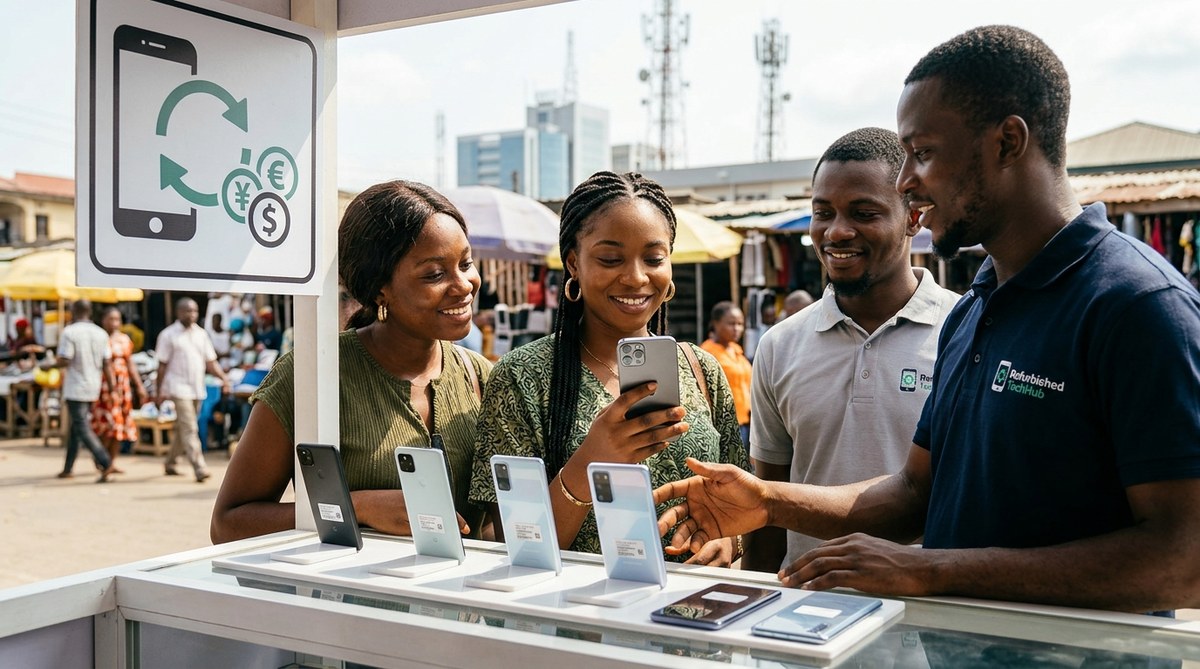
The numbers are hard to ignore. Across Nigeria, Kenya, South Africa, and Ghana, the appetite for refurbished smartphones is surging. For years, many consumers viewed second-hand devices with suspicion. They worried about hidden defects, counterfeit parts, and short battery life. But a new wave of certified refurbishment programs, better warranties, and the rising cost of new flagships have changed the game. In 2026, buying a pre-owned phone is no longer a compromise. It is a smart, strategic choice for individuals and businesses alike. The trend is reshaping mobile access, digital inclusion, and even startup operations across the continent.
Refurbished smartphones are gaining traction across Africa because they solve real problems. High new-device prices push consumers toward affordable alternatives. Certified refurbishers now offer warranties, quality checks, and reliable returns. E-commerce platforms make browsing and buying easier. For businesses, refurbished handsets lower equipment costs and support digital payment expansion. The shift is accelerating as sustainability awareness grows and economic pressures persist. Analysts should watch this market closely — it is reshaping mobile access.
What’s Driving the Surge in Refurbished Smartphones Across Africa?
Affordability is the biggest engine. New flagship smartphones from top brands now cost more than the average monthly salary in many African countries. A factory-sealed iPhone or Galaxy S series can set someone back $800 to $1,200. Meanwhile, a certified refurbished model from the previous generation costs half that or less. Import taxes and currency fluctuations only widen the gap. For millions of consumers, a refurbished device is the only realistic path to a premium smartphone experience.
But price alone doesn’t explain the scale of traction. The quality of refurbished devices has risen dramatically. Companies like Rebuy, Back Market, and local players such as Kilimall and Jumia have built trust through grading systems and return policies. Buyers see “Grade A” or “Like New” labels backed by a 12-month warranty. These assurances reduce the perceived risk. In response, more people are willing to buy devices sight unseen.
Another factor is the explosion of mobile-first services. Banking, education, healthcare, and e-commerce all run on smartphones in Africa. Refurbished phones allow more people to access these services without breaking the bank. For example, a small business owner in Lagos can buy a refurbished Samsung A series for about $150 and use it for mobile money transfers, inventory tracking, and customer communication. That low barrier to entry opens doors that a new $600 phone would keep closed.
E-commerce platforms deserve special credit. They have made browsing, comparing, and purchasing refurbished smartphones as easy as buying new. Payment methods like M-Pesa and mobile money integrate smoothly. Many sellers offer free delivery and 30-day returns. This convenience matters in markets where physical stores are scarce in rural areas. The combination of lower prices, better quality, and easier buying is a powerful trifecta.
Who Benefits Most from the Refurbished Smartphone Trend?
The answer cuts across multiple groups. Let’s look at the main beneficiaries.
- Individual consumers: Students, freelancers, and gig workers get capable devices at a fraction of new prices. They can afford mid-range or even premium phones that would otherwise be out of reach.
- Small and medium businesses: Entrepreneurs can equip their teams with reliable smartphones for mobile payments, logistics, and customer outreach without huge capital outlays.
- Fintech startups: Companies building payment apps or digital lending platforms often distribute low-cost devices to agents and field staff. Refurbished phones reduce those distribution costs.
- Educational institutions: Schools and training centers providing tablets or phones for e-learning can stretch budgets further with refurbished equipment.
- Environmental advocates: A device that gets a second life keeps e-waste out of landfills, which is a growing concern in urban Africa.
For market researchers and business analysts, the ripple effects matter. When a larger portion of the population owns a smartphone, data consumption rises, digital services expand, and new business models emerge. Refurbished smartphones are not just a budget option — they are a catalyst for broader digital inclusion.
How to Buy a Refurbished Smartphone Safely in Africa
If you are a business analyst or a consumer evaluating refurbished options, follow these steps to avoid common pitfalls. The process is straightforward when you know what to look for.
-
Choose a reliable seller. Stick with established platforms like Back Market, Jumia Verified, or major telecom carriers that offer certified refurbished programs. Avoid unknown sellers on social media unless they provide clear return policies.
-
Check the grading system. Reputable sellers use grades: “Grade A” means near-perfect condition, “Grade B” may have light scratches, “Grade C” has visible wear. For business use, always aim for Grade A or Grade B.
-
Verify the warranty. A minimum 6-month warranty is standard. Some sellers offer 12 months. Read the warranty terms carefully — what is covered and what is excluded (battery, screen, water damage).
-
Confirm the IMEI is clean. Ask for the IMEI number and check it on a service like IMEI.info or through your carrier. A clean IMEI means the phone is not stolen, blacklisted, or tied to an unpaid contract.
-
Test the device within the return window. As soon as the phone arrives, check the screen, camera, battery health, charging port, buttons, and speaker. If anything seems off, return it immediately.
-
Use a secure payment method. Mobile money or credit cards with buyer protection are safer than bank transfers. Some platforms hold payment until you confirm delivery.
These steps drastically reduce the risk of a bad purchase. They also build confidence in the refurbished market, which is crucial for its continued growth.
Refurbished vs. New: A Side-by-Side Comparison
The table below highlights the key differences between buying a refurbished smartphone and a new one in Africa. Use it to weigh your options.
| Factor | Refurbished Smartphone | New Smartphone |
|---|---|---|
| Price | 40-70% cheaper than new | Full retail price |
| Warranty | Typically 6 to 12 months | 12 to 24 months (manufacturer) |
| Condition | Varies by grade (A/B/C) | Unboxed, flawless |
| Battery health | Often replaced or tested above 80% | 100% |
| Accessibility | Widely available online | Available at stores and online |
| Environmental impact | Lowers e-waste, circular economy | Higher manufacturing carbon footprint |
| Trust level | Growing, but requires due diligence | Established trust with brands |
| Availability of latest OS | May stop updates sooner | Guaranteed updates for 2-3 years |
For most consumers and businesses in Africa, the value proposition of refurbished leans heavily in its favor. The savings are real, and with a good warranty, the risk is manageable.
Why Businesses Are Betting on Refurbished Devices
Consider a fintech startup in Nairobi that needs to distribute 500 smartphones to agents across Kenya. Buying new devices at $300 each would cost $150,000. Refurbished models of the same brand and specs are available for $120 each, cutting the cost to $60,000. That savings of $90,000 can be redirected to marketing, software development, or hiring. For a startup operating on thin margins, that difference can mean survival.
The same logic applies to small retail chains, logistics companies, and even schools. Refurbished smartphones let organizations scale device deployment without blowing their budget. Moreover, the devices are often factory reset and tested, so they come with minimal technical issues. Some refurbishers even offer corporate volume discounts and custom imaging software.
“The refurbished smartphone market in Africa is not just a second-hand trade. It is a structured ecosystem that enables affordability while maintaining quality. As brands expand their certified programs, we are seeing a shift from distrust to preference. In 2026, more companies are building their hardware strategy around refurbished devices.” — Akinwale Adegoke, Senior Analyst at Mobile Insights Africa
Expert perspective like that underscores the maturity of the market. The days of “refurbished equals risky” are fading.
The Role of E-Commerce and Mobile Money
Without e-commerce, the refurbished boom would not be possible. Platforms like Jumia, Konga, and Takealot have dedicated sections for refurbished electronics. They enforce seller standards, handle disputes, and process payments securely. Mobile money integration is the secret sauce. In countries like Ghana and Uganda, many customers do not have a credit card. They can pay via mobile money upon delivery, which builds trust. Once a buyer receives a refurbished phone and confirms it works, the payment is released to the seller.
This trust loop is critical. It allows first-time buyers to try refurbished without fear of losing their money. And once they have a good experience, they become repeat customers. The market reinforcement is self-sustaining.
Looking Ahead: What Refurbished Smartphone Growth Means for Africa
The trajectory is clear. By 2028, refurbished smartphones could account for 30% of all smartphone purchases in sub-Saharan Africa, according to some industry forecasts. That would represent millions of additional connected users. For businesses, that means a larger addressable market for digital services. For researchers, it means richer data sets on usage patterns. For policymakers, it underscores the need for consumer protection laws that cover second-hand devices.
Companies like Apple and Samsung are already taking notice. They have started offering official refurbished devices in selected African markets, often with a one-year manufacturer warranty. This endorsement from top brands further legitimizes the segment. Local refurbishers are also stepping up their game, investing in diagnostic tools and quality assurance labs.
The trend dovetails with other movements. As noted in our guide on the top 10 budget smartphones dominating the African market in 2026, the boundaries between new and refurbished are blurring. Many budget phones sold as new are actually entry-level devices with lower specs, while refurbished mid-range phones offer better performance for a similar price. That dynamic pushes consumers toward higher quality without spending more.
Similarly, for business owners, understanding how to choose the right smartphone for your business in Africa now includes evaluating refurbished options alongside new ones. It is no longer a binary choice.
A Final Word on the Refurbished Smartphone Revolution
Africa is home to a young, ambitious, mobile-first population. But high poverty rates and currency volatility make new flagship phones a luxury. Refurbished smartphones bridge that gap. They deliver performance, reliability, and connectivity at a price the market can bear.
For business analysts and tech journalists covering this space, the story is not just about cheaper phones. It is about how a circular economy for electronics can drive digital inclusion, reduce e-waste, and fuel startup growth. As you track these trends, pay attention to the local refurbishers, the warranty policies, and the payment innovations that make this model work.
If you are a market researcher, consider surveying consumers on their refurbished purchasing habits. The insights will help you paint a fuller picture of Africa’s mobile future. And if you run a business, think about how certified refurbished devices can stretch your technology budget. The traction is real, and it is only going to strengthen.
Take a moment to explore our other analysis on the future of smartphone technology in Africa to see how these trends connect. The next time you see a refurbished smartphone deal, you will know it is not just a bargain — it is part of a continent-wide shift.