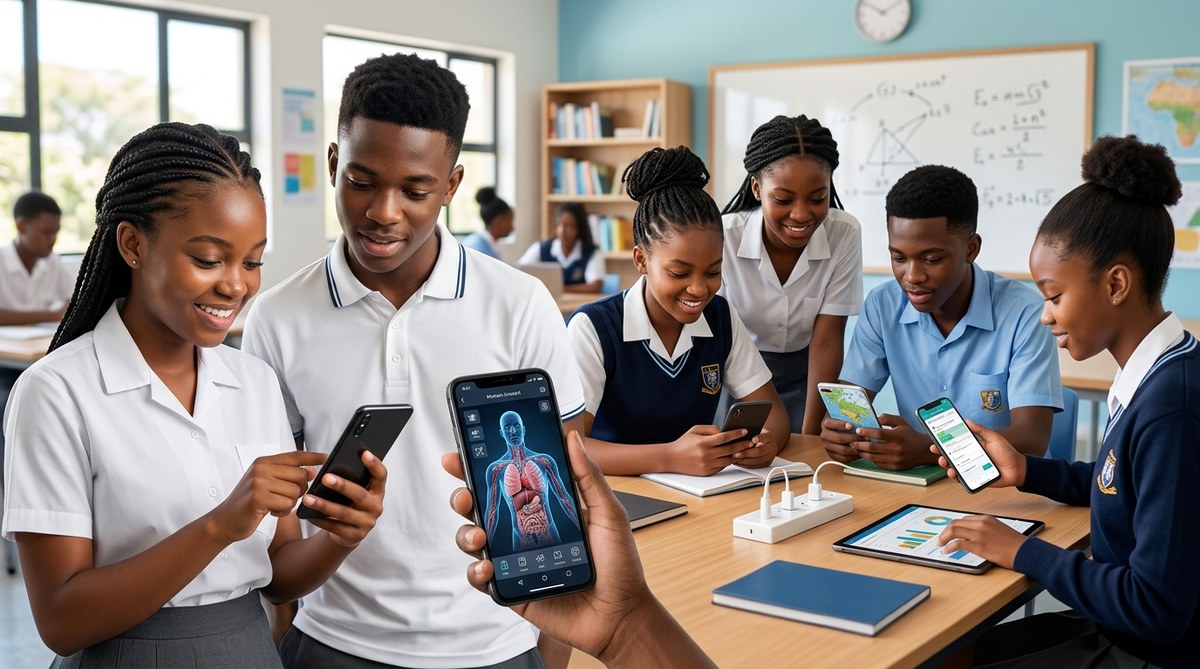
A student in rural Kenya opens a science app on a $40 smartphone. No internet connection needed. The lesson plays in Swahili. A farmer in Ghana learns crop nutrition through a mobile game. A teacher in Nigeria completes a certification course during her commute. This is not a future dream. It is happening right now across Africa, and the scale keeps growing.
Smartphones are the backbone of Africa’s education transformation in 2026. Five major trends define this shift: mobile-first learning platforms, offline AI tutors, teacher training via phone, peer learning through messaging apps, and affordable devices that widen access. Together they break down barriers of cost, connectivity, and geography. Educators and EdTech professionals who understand these trends can design smarter, more inclusive solutions.
The Rise of Mobile-First Learning Platforms
Traditional eLearning assumed a desktop computer and stable Wi-Fi. That model never fit Africa. In 2026, the continent leapfrogged to a mobile-first approach. Platforms like Eneza Education and M-Shule now serve millions of students through SMS, USSD, and lightweight apps. Lessons are bite-sized. Quizzes arrive via text. No app store required.
These platforms do not just mirror textbooks. They adapt to each student. If a learner struggles with fractions, the system sends more practice problems. If they ace a unit, it moves them ahead. This personalization was impossible in a crowded classroom of 60 students.
For EdTech professionals, the lesson is clear: design for the smallest screen first. Assume a 4-inch display, limited storage, and intermittent data. That constraint leads to cleaner, more effective learning tools.
Offline AI Tutors and Data-Light Apps
Internet access remains patchy across Africa. Only about 40% of the population had mobile broadband in 2025. But smartphone penetration grew to over 60% in 2026, thanks to cheaper devices. The gap between owning a phone and having reliable data is where offline AI tutors shine.
Apps like Kolibri and Wikipedia for Schools store entire curriculum libraries on the phone. A student in a remote village can access video lessons, practice exercises, and reference materials without a single byte of data. Newer apps add artificial intelligence that runs locally. The phone becomes a tutor that gives instant feedback on math problems or language exercises.
One standout is the app “Mwalimu AI,” developed by a Kenyan startup. It uses a small language model that fits on phones with 2GB of RAM. Students speak their answers in English or Swahili. The AI corrects pronunciation and grammar. All processing happens on the device. This trend connects directly to the broader shift in emerging smartphone features transforming connectivity in Africa. Offline AI is not a stopgap. It is the main strategy for reaching the last mile.
Teacher Training in Your Pocket
Professional development for teachers used to mean traveling to a district center for a workshop. That changed dramatically. Today, teachers across Africa use WhatsApp, Telegram, and dedicated apps for ongoing training.
A program called “Eneza Teacher” sends daily tips and micro-lessons to educators. They learn classroom management techniques, new assessment methods, and how to integrate smartphones into lessons. After each module, they complete a short quiz. Completion rates exceed 80%, compared to 40% for traditional workshops.
“The smartphone turns every teacher into a lifelong learner. We have trained over 200,000 teachers in three years using a simple Android app. No laptops, no projectors, just a phone and a willingness to grow.”
Grace Mwangi, Co-Founder of EduTech Africa
This approach cuts costs dramatically. A single year of mobile training costs about $5 per teacher, versus $200 for a three-day workshop when you factor in travel and accommodation. Schools now allocate device budgets not just for students, but for their teachers too.
Peer Learning Through Social Messaging
Classrooms in Africa are often overcrowded. One teacher may manage 70 or more students. Personal attention is scarce. Group chats on WhatsApp and Telegram fill that gap.
Students create study groups. They share notes, ask questions, and explain concepts to each other. A 2025 study in Nigeria found that exam scores improved by 18% among students who participated in active WhatsApp groups compared to those who studied alone.
Smartphones enable a new kind of peer learning that goes beyond the school bell. A student in Tanzania can post a chemistry question at 9 PM and get an answer from a classmate within minutes. Some groups invite volunteer tutors from local universities. The phone becomes a 24/7 help desk.
For EdTech professionals, the opportunity lies in building better social learning features inside apps. Polls, shared whiteboards, and voice notes can make these groups more effective. But the core driver is the same: smartphones connect learners to each other.
Affordable Smartphones Lowering the Barrier
The biggest barrier to mobile learning used to be the cost of the device. In 2026, that barrier is crumbling. Brands like Tecno, Infinix, and Xiaomi now sell capable smartphones for under $50. Refurbished phones from markets in Nairobi, Lagos, and Accra sell for as little as $25.
Affordable devices mean more students own a phone. A 2026 survey by GSMA found that smartphone ownership among 15-24 year olds in Sub-Saharan Africa reached 72%, up from 48% in 2021. Ownership is no longer the main issue. The challenge now is ensuring that every student can afford a device and has access to relevant content.
Governments and NGOs are stepping in. Kenya’s “One Learner One Device” program distributes low-cost tablets preloaded with curriculum. Uganda’s partnership with local manufacturers produced a $30 smartphone specifically for education. The device comes with a solar charger and a year of free educational app access.
If you are an educator looking to adopt mobile learning, start by understanding the hardware landscape. Check out the top 10 budget smartphones dominating the African market in 2026 to know what your students likely carry. Design your content for those specifications.
Comparing Traditional and Smartphone-Enhanced Learning
To see how smartphones reshape education, here is a straightforward comparison:
| Aspect | Traditional Classroom (No Smartphones) | Smartphone-Enhanced Classroom |
|---|---|---|
| Access to materials | One textbook per subject | Thousands of lessons, videos, and quizzes on one device |
| Personalization | One teacher, one pace for all | Adaptive apps that adjust to each learner |
| Teacher training | Occasional workshops, expensive travel | Daily micro-learning on the phone, low cost |
| Peer interaction | Limited to school hours | 24/7 group chats and study circles |
| Cost per student | High for books, infrastructure | Low for digital content, device can be shared |
| Language support | Usually one or two languages | Voice interfaces and apps in dozens of African languages |
The table makes one thing clear: smartphones do not replace teachers. They amplify them. The teacher still sets the direction, but the phone delivers resources and practice at a scale impossible with paper alone.
4 Steps to Integrate Smartphones into Your Classroom
For educators new to this approach, here is a practical process based on what works across Africa:
- Audit your students’ devices. Survey how many have phones, what models, and whether they have data plans. Do not assume. Many share devices with siblings.
- Choose offline-first tools. Select apps that work without constant internet. Use platforms like Kolibri, Moodle Mobile, or custom SMS systems.
- Train students on task management. Smartphones are also entertainment devices. Teach students to set timers, use do-not-disturb mode, and focus on one app at a time.
- Start with one subject. Pick a single class where mobile learning adds clear value. For example, use a vocabulary app for English or a simulation app for science. Scale only after you see results.
Key Benefits of Smartphones in African Education
- Reach: A single phone can serve an entire family. Siblings take turns using it for lessons.
- Cost: Digital textbooks cost a fraction of printed books. Updates are free.
- Language: Apps can switch between 20+ African languages. No need to wait for translated textbooks.
- Data collection: Teachers can track progress in real time. No piles of papers to grade.
- Parent involvement: Parents get weekly SMS updates on their child’s performance. Engagement rises.
These benefits are not theoretical. They are measured in higher pass rates, lower dropout numbers, and happier teachers.
Where Mobile Learning Heads Next in Africa
The trends we see today will accelerate. By 2028, AI tutors that run on mid-range phones will be common. Voice interfaces will allow illiterate parents to help their children study. Smartphones will double as library, calculator, dictionary, and tutor.
The challenge remains content quality. Too many apps are poorly translated or culturally irrelevant. That is where African EdTech startups can lead. They know the context. They can build apps that use local examples, local voices, and local currency.
For educators, the smartphone is not a distraction. It is the most powerful learning tool most students will ever own. The job now is to put good content on it, train teachers to use it wisely, and keep the device in the hands of every learner. The phone is already in their pocket. The only question is: what will they learn on it today?
If you are building the next generation of mobile learning tools, start by understanding the hardware and connectivity realities. Read our guide on how African consumers are shaping the future of smartphone innovation in 2026 to see what features matter most. Then go design something that works when the internet cuts out and the battery is at 15%. That is where the real impact lives.