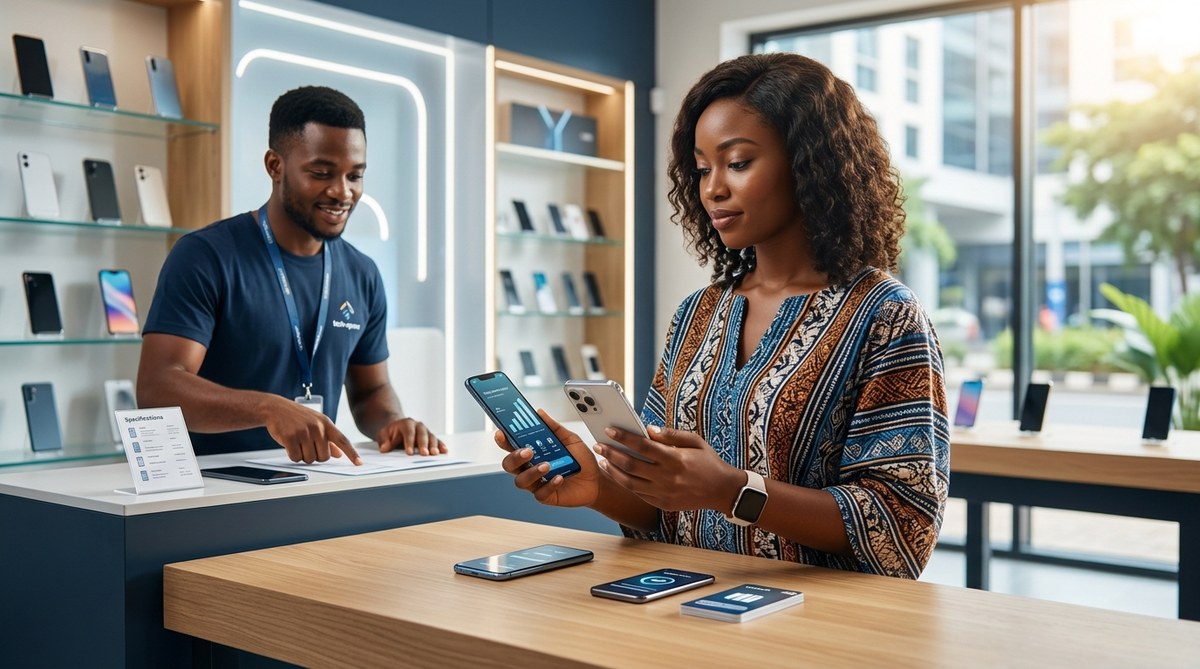
Imagine walking into a phone shop in Lagos or Nairobi with one question on your mind: “Which phone gives me the most value for my data money?” In 2026, that question defines the entire smartphone market in Africa. Prepaid data plans are no longer just a payment method; they have become the central factor that dictates which devices consumers buy, which brands thrive, and how networks design their offers. For telecom analysts, market researchers, and smartphone brand strategists, understanding this shift is critical. The days of choosing a phone solely by camera megapixels or screen size are fading. Now the decision starts with the data plan itself.
In 2026, African prepaid data plans are the deciding factor in smartphone purchases. High data costs push consumers toward devices with better battery, efficient modems, and dual SIM capabilities. Brands that align phone specs with affordable plan bundles are winning market share. Analysts must track data pricing trends to predict device demand accurately. The prepaid model is reshaping the entire value chain from network to handset.
How Prepaid Data Plans Are Redefining the Smartphone Market in Africa
Africa remains a prepaid dominant continent. More than 90% of mobile connections in Sub Saharan Africa are prepaid, according to GSMA intelligence. That number has not changed much, but what has changed is how deeply prepaid data plans influence phone purchases. In 2026, buying a smartphone without considering the data plan is like buying a car without checking gas prices. The plan dictates usage, which dictates the phone specs you need.
Take Nigeria as an example. A typical prepaid data bundle for 1GB might cost anywhere from 300 to 500 naira depending on the operator and promotion. Users who rely on daily data packs often need phones with strong battery life because they cannot always charge during the day. That pushes them toward devices with 5000 mAh batteries or fast charging. Meanwhile, in South Africa, where data is relatively cheaper but still a major monthly expense, consumers lean toward phones with efficient chipsets to stretch each gigabyte.
Smartphone brand strategists now segment their devices based on typical plan prices in each country. A phone that sells well in Ghana might flop in Kenya if it does not support the dual SIM configurations that Kenyan prepaid users demand. The prepaid model creates localized requirements that global brands cannot ignore.
The Direct Link Between Data Pricing and Device Choice
Data pricing varies wildly across Africa, and those differences map directly onto smartphone purchasing behavior. To help visualize this, here is a table showing three typical prepaid data cost tiers and the smartphone features that become priorities for each tier.
| Data Cost Tier | Typical Monthly Spend (1GB) | Dominant Smartphone Features Sought |
|---|---|---|
| Low (under $2) | $1.50 $2.00 | Long battery life, efficient processor, dual SIM, removable battery (still common in some markets) |
| Medium ($2 $5) | $3.00 $5.00 | Good camera for social media, larger screen, 4G+ with carrier aggregation, expandable storage |
| High (above $5) | $6.00 $10.00 | Premium build, fast charging, 5G readiness, high resolution display for offline content |
The pattern is clear. When data is cheap, users want phones that perform well on the network. When data is expensive, they want phones that conserve data and power. Brands that miss this connection end up with inventory that does not move.
For example, in Ethiopia, where data costs have been historically high due to limited competition, phones with aggressive battery optimization and data saving features sell better than flashy mid range devices. Meanwhile, in Kenya, where Safaricom and Airtel offer competitive data bundles, users are more willing to spend on phones with better cameras because they use more social media and streaming.
What Smartphone Features Matter Most for Prepaid Users
Prepaid users in Africa prioritize a specific set of features. These are not the same as what a postpaid user in Europe or North America might look for. Here are the top features that drive purchase decisions in 2026:
- Battery capacity and charging speed. A phone that dies mid day can mean lost work, missed family calls, and wasted data. Users want at least 5000 mAh.
- Dual SIM with 4G 5G support. Prepaid users often carry two SIMs from different networks to take advantage of promotions. A phone that supports dual 4G or dual 5G is a must.
- Data saving software. Built in data compression, app management, and battery saver modes are highly valued.
- Expandable storage. Many users store music, videos, and documents offline to avoid data charges. A microSD slot is a strong selling point.
- Reliable network band support. A phone that supports the specific LTE bands used by local carriers delivers better performance. Users research this before buying.
These features often matter more than brand name or camera quality. For telecom analysts, this means that handset sales data alone does not tell the full story. You have to overlay data plan penetration and pricing to understand why a particular model wins in one region and fails in another.
If you are looking for specific models that match these preferences, check out our list of the Top 10 Budget Smartphones Dominating the African Market in 2026. It covers devices that have successfully aligned with prepaid data plan realities.
A Practical Look: How Consumers Choose a Phone Based on Data Plans
Let us walk through the decision process of a typical prepaid user in Accra, Ghana. This person earns a modest income, relies on mobile data for work and entertainment, and has a monthly budget of about 30 Ghanaian cedis for data. Here is the step by step approach they take when buying a new smartphone.
- Check current data deals. They look at what their network offers. If MTN has a 3GB weekly bundle for 10 cedis, they want a phone that can handle that volume without crashing.
- Identify essential apps. They list the apps they use most: WhatsApp, YouTube, TikTok, maybe a mobile money app like MoMo. Each app has data requirements. A phone with low RAM might struggle with multitasking.
- Match battery to usage. If they rely on mobile money and messaging all day, they need a phone that lasts at least 12 hours of mixed use. They check reviews for battery drain tests.
- Compare dual SIM performance. They might want to keep a second SIM for voice calls or another network’s cheaper data. The phone must support dual 4G standby.
- Search for a phone with data saving features. Many modern Android phones have built in data saver modes. Some Chinese brands like Tecno and Infinix even include dedicated data management apps.
- Set a budget based on total cost of ownership. The phone price plus monthly data cost must fit their income. They may accept a less premium device to keep data affordable.
This process shows that the smartphone purchase is not an isolated decision. It is tied directly to data affordability and usage patterns. Market researchers can use this framework to segment audiences more accurately.
For entrepreneurs who rely on their phones for business, the choice is even more critical. Our guide on How to Choose the Right Smartphone for Your Business in Africa covers additional factors like security and multitasking.
The Role of Bundled Data and Device Subsidies
A growing trend in 2026 is the bundling of prepaid data plans with smartphones. Network operators in countries like Kenya, Nigeria, and South Africa are offering devices at a discount when customers sign up for a data plan of a certain value. This is not a postpaid subsidy; it is a prepaid bundle where the customer pays for the plan upfront and gets a phone at a reduced price.
“Bundling is the smartest weapon right now,” says Amara Okafor, a telecom strategy consultant based in Lagos. “Consumers want the phone and the data in one smooth purchase. If you can create a bundle that feels like a deal, you win loyalty. The device becomes a gateway to the network’s ecosystem.”
These bundles often prioritize phones with specific features like dual SIM and long battery life because networks want users to stay online longer. For brand strategists, this means partnering with telcos is no longer optional. If your phone is not part of a popular bundle, you are losing sales.
The impact goes both ways. Networks are also demanding that manufacturers include certain software tweaks, like pre installed carrier apps or data monitoring tools, in exchange for bundle placement. This creates a feedback loop where prepaid data plans shape not just what phone is bought but also how the phone works out of the box.
Why Network Coverage Still Drives Brand Loyalty
No matter how good the phone or how cheap the data, if the network drops frequently, the user is unhappy. In 2026, coverage remains the single biggest factor in customer satisfaction. But coverage is not just about signal strength. It is about which frequencies the phone supports.
Many African countries are still deploying 5G on newer bands like n78 and n41. A phone that lacks those bands will not get 5G even if the network offers it. Prepaid users who pay for 5G data but cannot use it will blame the phone, not the network. That is why brand strategists must ensure their devices support the bands used by the major carriers in each target market.
For a deeper look at which countries are leading in connectivity, read our analysis on 5G or Not: Which African Countries Are Leading Smartphone Connectivity?. It highlights where 5G is actually making a difference for prepaid users.
What This Means for Smartphone Brands in 2026
Brands that succeed in Africa this year are those that treat prepaid data plans as a product design input. Here is a table summarizing the strategies used by different types of brands.
| Brand Type | Typical Approach | Example Strategy |
|---|---|---|
| Global giants (Samsung, Apple) | High end devices with carrier partnerships | Samsung bundles Galaxy A series with MTN data plans in Nigeria |
| Chinese brands (Tecno, Infinix, Xiaomi) | Localized features and aggressive pricing | Tecno includes a dedicated data manager app in all phones for African markets |
| African assemblers (Mara, Simmtronics) | Ultra low cost with basic features | Mara phones offer dual SIM and long battery to appeal to rural prepaid users |
| Online only brands (Xiaomi, realme) | Competitive specs with flash sales | Realme partners with Safaricom for exclusive online bundles in Kenya |
The data is clear: if your brand does not understand the prepaid landscape, you will struggle. Analysts should track changes in data pricing and bundle offerings as leading indicators for handset demand.
For a broader view of where smartphone technology is headed, see The Future of Smartphone Technology in Africa: Trends to Watch in 2026. It covers foldables, AI, and other innovations that may shift consumer preferences.
The Road Ahead: Prepaid Data as a Market Shaper
The relationship between prepaid data plans and smartphone purchases in Africa is not static. As data prices fall and 5G coverage expands, the features that matter will shift. For example, once 5G becomes widespread, users may prioritize phones with newer modems over battery size. But for now, the core dynamic remains: the data plan leads and the smartphone follows.
For telecom analysts, the key metric to watch is the average revenue per data user (ARPDU) per country. For market researchers, consumer surveys should always include questions about data plan preferences. And for brand strategists, the message is simple: align your product roadmap with the prepaid data reality of each market.
Smartphones are not just communication tools in Africa. They are gateways to education, finance, and entertainment. The prepaid data plans that power them are the unsung heroes shaping that reality. In 2026, the most successful players are those who see the connection clearly and act on it.
If you are a brand strategist, start your next product review by studying the data plans available in your target countries. If you are an analyst, build models that include data pricing as a variable. And if you are a researcher, look at the full picture: not just who buys what phone, but why their data plan drove that decision.
The prepaid revolution is not slowing down. Neither should your understanding of it.