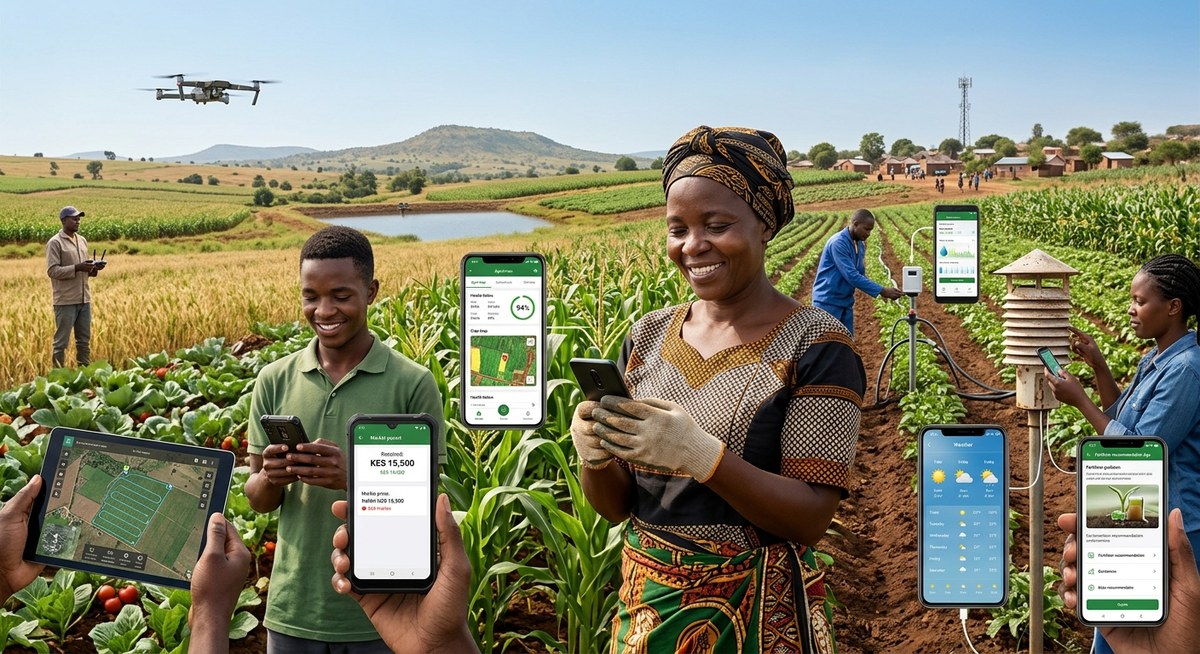
A farmer in rural Kenya pulls a smartphone from their pocket. With a few taps, they check soil moisture levels, view a seven day weather forecast, and confirm the best price for their maize at a market 200 miles away. Ten years ago, none of this was possible. Today, it is routine.
Smartphones are not just communication tools in Africa. They are becoming the central hub for farming decisions. Across the continent, smallholder farmers who once relied on tradition and guesswork now use mobile apps, sensors, and digital payments to grow more food and earn more money. The shift is happening fast, and it is changing the face of agriculture.
Smartphones are reshaping African agriculture by giving farmers access to real time data, financial services, and direct markets. In 2026, mobile technology helps smallholders reduce waste, improve crop health, and connect with buyers. Researchers and agri-tech professionals see this as a turning point for food security and rural economic growth across the continent.
Five Ways Smartphones Are Changing Farming on the Ground
The numbers tell a strong story. By early 2026, over 650 million people in sub Saharan Africa own a smartphone. That number grows every month. And a growing share of those users are farmers or people who support farming communities. Here are the five most impactful ways smartphones are revolutionizing agriculture across Africa right now.
1. Precision Data Without the Price Tag
Precision agriculture used to require expensive drones, satellites, or hired consultants. Now, a smartphone with the right app can do much of the same work.
Farmers use apps that connect to low cost Bluetooth soil sensors. These sensors measure moisture, temperature, and nutrient levels. The phone collects the data and presents it in simple charts. No internet connection is needed for the sensor link, only for syncing reports later.
Take a tomato farmer in northern Nigeria. They used to water their field on a fixed schedule. Some sections got too much water, others too little. Now, with a $15 sensor and a free app, they water only when the soil is dry. They save water, reduce disease, and get better fruit.
Other apps use the phone camera itself. Farmers take a photo of a leaf, and the app identifies pests or nutrient deficiencies. This kind of visual diagnosis was once only available through extension officers who visited once a season. Now, it happens in seconds.
2. Financial Services That Reach the Last Mile
Access to money has always been a bottleneck for smallholder farmers. Banks rarely have branches in rural areas. Without a formal banking history, getting a loan for seeds or fertilizer is nearly impossible.
Smartphones have cracked this problem open. Mobile money platforms like M-Pesa in East Africa and Moov in West Africa let farmers send, receive, and save money from a basic smartphone. In 2026, these platforms also offer microloans based on transaction history. A farmer who uses mobile money to buy supplies can build a credit score without ever walking into a bank.
Insurance is another area where smartphones make a difference. New insurtech apps use satellite weather data and phone location services to create micro insurance policies. If the rains fail, the farmer gets a payout automatically. No paperwork. No delays. The phone handles everything.
For researchers studying rural economies, this shift is massive. When farmers can access capital and manage risk, they invest more in their land. Yields go up. Food supply chains become more stable.
3. Real Time Market Information That Puts Power in Farmers’ Hands
One of the oldest problems in African agriculture is information asymmetry. Middlemen know the market prices. Farmers often do not. That gap costs farmers a huge portion of their potential income.
Smartphones are closing that gap. Apps like Esoko, iCow, and MFarm provide live price data for crops across different markets. A farmer in Ghana can check the price of yams in Accra, Kumasi, and Tamale before deciding where to send their harvest.
This is not just about convenience. It is about power. When a farmer knows the market price, they can negotiate. They can walk away from a bad offer. They can choose to sell locally or ship to a distant city where prices are higher.
The impact on household income is significant. Studies from 2025 show that farmers using market price apps earn 15% to 25% more per crop cycle compared to those who do not. For a family growing maize on two hectares, that extra income can mean school fees, medical care, or savings for the next season.
4. Smart Advisory Services That Scale
Extension services in Africa have historically been underfunded and understaffed. In many countries, there is one agricultural extension officer for every 5,000 farmers. That ratio makes personalized advice impossible.
Smartphones solve this through automated advisory platforms. Chatbots and voice based services in local languages give farmers access to expert knowledge on demand. A farmer in Uganda can ask “When should I plant beans in Mbale district?” and get an answer based on local weather data, soil type, and historical patterns.
These platforms are not static. They learn from user input and adjust recommendations. Some use machine learning to predict pest outbreaks based on reports from thousands of other farmers. When a wave of fall armyworm is detected in one region, the app warns farmers in neighboring areas before the pest arrives.
The best part is that these services work on low end smartphones. They use SMS and USSD codes for farmers who have limited data. They work in English, Swahili, Hausa, Yoruba, Amharic, and dozens of other languages.
| Challenge | How Smartphones Solve It | Real World Example |
|---|---|---|
| Limited extension officers | Automated chatbots give on demand advice | A cassava farmer in Nigeria asks a voice bot about fertilizer timing |
| Unknown market prices | Live price tracking across multiple markets | A tomato seller in Kenya checks prices in Nairobi vs Mombasa |
| No access to loans | Mobile money transaction history unlocks microloans | A coffee grower in Ethiopia gets seed financing via M-Pesa |
| Pest and disease ID | Camera based apps diagnose problems from leaf photos | A rice farmer in Senegal uploads a photo and gets treatment steps |
| Unpredictable weather | Hyperlocal forecasts and crop specific alerts | A maize farmer in Zambia receives a frost warning 48 hours early |
5. Direct Connections That Cut Out the Middle
Beyond market prices, smartphones let farmers build direct relationships with buyers. Social media, WhatsApp groups, and dedicated agri commerce platforms connect growers with restaurants, hotels, schools, and even export partners.
A farmer in Tanzania grows avocados. Instead of selling to a local broker at a low price, they post photos of their harvest on a WhatsApp group for buyers in Dar es Salaam. A hotel chef sees the post, likes the quality, and places an order. The farmer delivers directly. The chef pays via mobile money. Both sides win.
This direct model is growing fast. Platforms like Twiga Foods in Kenya and Soko in Ghana started as logistics companies. Now they are full digital marketplaces. Farmers list their produce. Buyers browse and order. The platform handles transport and payment. Everyone gets transparency.
For journalists covering food systems, this is a rich story. It shows how technology can bypass broken infrastructure and create new value chains. For agri-tech startups, it represents a massive opportunity to build tools that make these connections even easier.
“The smartphone is the most powerful agricultural tool we have seen in a generation. It does not replace the hoe or the irrigation line, but it makes every other investment smarter. A farmer with a phone and the right apps is better equipped than most extension officers were ten years ago.” — Dr. Amina Kone, Agri Tech Researcher at the University of Nairobi
How These Changes Flow Through the Entire Food System
The impact of smartphones on agriculture does not stop at the farm gate. It ripples through the whole food system.
Processors get better quality raw materials because farmers can access advice on harvest timing and storage. Transporters get more efficient routes because market apps show where demand is highest. Consumers get fresher food because the supply chain moves faster.
Researchers also benefit. Smartphone generated data gives researchers a clearer picture of planting patterns, crop yields, and market flows. This data helps governments and NGOs make better policy decisions. It helps agronomists develop seeds that perform well in specific microclimates. It helps everyone understand what is actually happening in the field, not just what reports say.
For rural development practitioners, smartphone adoption is a proxy for economic resilience. Communities with higher smartphone penetration tend to have better food security, higher household incomes, and more diversified livelihoods.
Three Simple Steps to Start Using Smartphones for Smarter Farming
If you are a researcher, extension officer, or startup founder looking to help farmers adopt smartphone tools, here is a practical process to follow.
-
Assess local phone ownership and connectivity. Before building or recommending an app, know what devices farmers actually use. In many areas, Android phones under $100 are the norm. Data plans may be expensive. Offline functionality is critical. Do surveys or use existing data from mobile network operators.
-
Choose one pain point to solve. Do not try to build the everything app. Start with one problem. Market information. Pest identification. Weather alerts. Water management. Solve that one thing really well. Farmers will adopt a tool that clearly saves them time or money.
-
Train through existing community networks. Farmers trust other farmers. Partner with cooperatives, women’s groups, or local agri dealers to run training sessions. Show the app working on a real phone with a real farmer. Let early adopters become champions who teach others.
Tools and Practices That Work Best in 2026
Not all smartphone tools are equal. The most effective ones share common traits.
- They work offline first. Sync happens when connectivity is available.
- They use the local language. Voice interfaces help farmers who cannot read.
- They respect low battery life. Lite versions and dark mode help.
- They integrate with mobile money. Payments and loans should happen inside the same ecosystem.
Farmers also appreciate tools that do not drain their phone storage. Apps under 20 megabytes are preferred. Tools that send SMS reminders for key tasks (planting time, pest checks, market days) see higher engagement than apps that require daily logins.
For entrepreneurs entering this space, the opportunity is clear. The demand for agricultural smartphone tools in Africa is growing faster than the supply. The farmers are ready. The phones are in their hands.
The Road Ahead for Mobile Agriculture in Africa
Smartphones are not a passing trend in African agriculture. They are becoming the backbone of a more efficient, equitable, and resilient food system. In 2026, we are still in the early innings. The tools are getting better. The networks are getting faster. The farmers are getting more comfortable with digital workflows.
For researchers, this is a fertile area of study. For agri-tech professionals, it is a field of action. For journalists, it is a story that matters. And for the millions of smallholder farmers across the continent, the smartphone in their pocket is becoming the most important tool they own.
The next time you see a farmer with a phone, do not assume they are just making a call. They might be checking soil health, applying for a loan, or selling their harvest at a better price. That small screen is doing big work.
To stay current on the tools and devices making this change possible, check out our guide to the top 10 budget smartphones dominating the African market in 2026. And if you are building technology for farmers, our piece on how African consumers are shaping the future of smartphone innovation in 2026 offers useful insights.