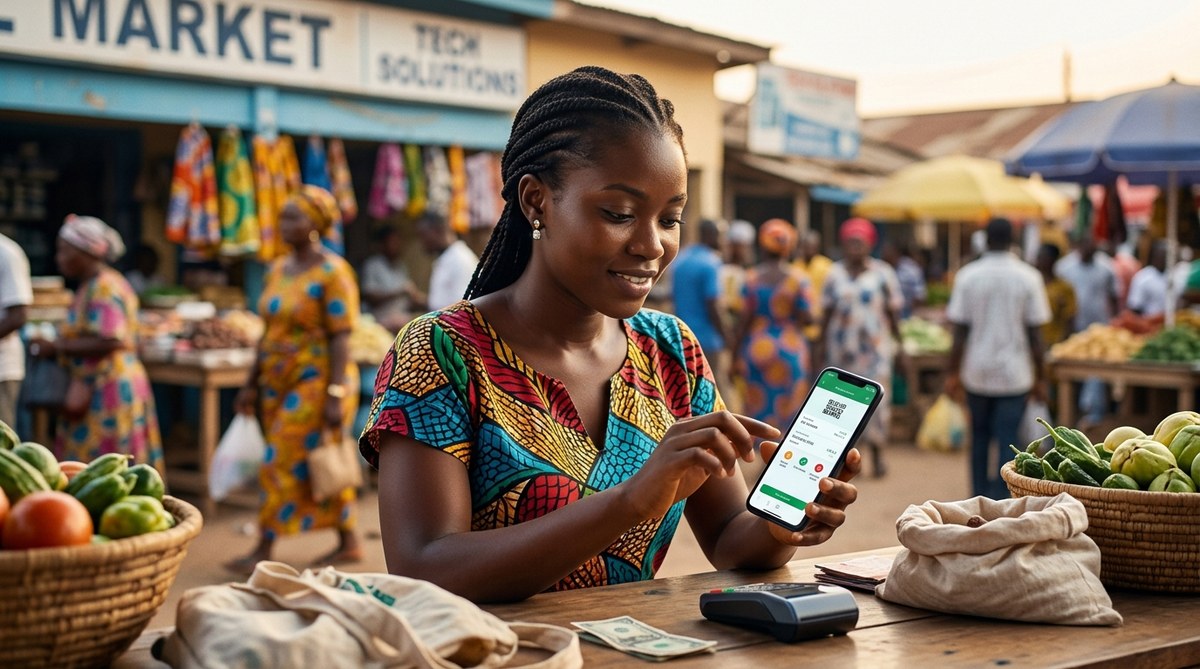
You are a freelancer in Nairobi who just received a payment from a client in Lagos. You open your mobile money app, punch in the details, and hit send. A few days later, the client asks if you got paid. You check your balance and see the money never arrived. The fee was higher than expected, and the exchange rate ate into your earnings.
This scenario is more common than you think. Smartphone payments have transformed how people send money, pay for goods, and run businesses across Africa. But the convenience comes with a hidden cost. Small mistakes in how you use mobile money can lead to lost funds, delayed transactions, and unnecessary fees. Whether you are a freelancer, a small business owner, or someone sending money to family, understanding these pitfalls is the first step to keeping more of your money.
Smartphone payment mistakes in Africa often come down to five common errors: ignoring exchange rates, using too many middlemen, forgetting about transfer speed, overlooking platform transparency, and relying only on banks. Fixing these habits can save you money, time, and stress. This guide breaks down each mistake and gives you practical steps to avoid them.
Mistake 1: Ignoring the Real Cost of Exchange Rates
When you send money across borders, the exchange rate you see is rarely the rate you get. Many mobile money apps and fintech platforms advertise zero fees but make up for it with a poor exchange rate. This hidden markup can cost you 3% to 8% of your transfer amount.
A common example: sending money from South Africa to Zimbabwe. A platform might show a rate of 1 ZAR to 16 ZWL, while the market rate is closer to 1 ZAR to 18 ZWL. On a 5,000 ZAR transfer, that difference means you lose about 10,000 ZWL before the transaction even starts.
How to check the real cost
- Look up the mid-market rate on a site like Xe.com or Google.
- Compare that rate with what the app is offering.
- Multiply the difference by your transfer amount.
- Add any stated fees to get the total cost.
Some apps show you the total cost upfront. Others hide it in the exchange rate spread. Always calculate the full amount before you confirm.
Mistake 2: Using Too Many Middlemen
The more hands your money passes through, the more fees stack up. A common chain looks like this: bank account to mobile money wallet, then to a peer-to-peer platform, then to a local agent who cashes it out. Each step takes a cut.
In 2026, the average cost of sending $200 to sub-Saharan Africa is still around 8%, according to the World Bank. But if you use a direct route, like a mobile money app that connects to a local mobile wallet, you can cut that cost to under 3%.
The simplest path
- Use a single app that supports both sending and receiving in the target country.
- Avoid cash-out agents if the recipient can keep the money in their mobile wallet.
- Choose platforms that partner directly with local mobile networks like M-Pesa, MTN Mobile Money, or Airtel Money.
If you run a business and pay multiple suppliers across different countries, consider a dedicated fintech platform that aggregates payments. This reduces the number of middlemen and keeps your fees predictable. For a deeper look at the tools available, check out our guide on mastering mobile payments: essential fintech apps every African entrepreneur should know.
Mistake 3: Forgetting About Transfer Speed
Not all transfers are created equal. Some take seconds. Others take days. The problem is that many people choose the cheapest option without checking the delivery time.
If you are paying a supplier who needs goods shipped by Friday, a three-day transfer window might cause delays. If you are sending emergency funds to a relative, waiting 48 hours is not acceptable.
A simple table to match speed with need
| Need | Best Option | Typical Time | Cost Level |
|---|---|---|---|
| Emergency funds | Mobile wallet to mobile wallet | Instant to 10 minutes | Low to medium |
| Bill payments | Bank transfer via app | Same day | Low |
| Supplier payments | Fintech aggregator | 1 to 24 hours | Medium |
| Bulk payroll | Bank transfer | 1 to 3 days | Low to medium |
Match your transfer method to your deadline. If speed matters, pay a small premium for an instant route. If time is flexible, choose the lowest cost option.
Mistake 4: Overlooking Platform Transparency
Some mobile payment apps are clear about fees, exchange rates, and delivery times. Others bury this information in fine print or terms of service. Using an opaque platform is a gamble.
Red flags to watch for
- No clear breakdown of fees before you confirm a transaction.
- Exchange rates that change between the preview and the final screen.
- Customer support that only responds through email or chatbots.
- No published list of supported countries or mobile networks.
Green flags to look for
- A fee calculator on the homepage.
- Real-time exchange rates with a clear markup percentage.
- Multiple support channels, including phone and live chat.
- Transparent terms of service that explain how disputes are handled.
Before you send any significant amount, test the platform with a small transfer first. Send 1,000 KES or 5,000 NGN and track the full process. This test run will reveal any hidden fees or delays.
For a broader view of how fintech is reshaping the space, read our article on how fintech innovations are transforming small business payments in Africa.
Mistake 5: Relying Only on Banks
Traditional banks in Africa often have high fees for cross-border transfers, slow processing times, and poor exchange rates. Yet many people default to their bank because it feels safer.
In reality, mobile money platforms and fintech apps often have stronger security features, including two-factor authentication, transaction limits, and real-time fraud alerts. They also tend to be more innovative in how they handle disputes.
When a bank makes sense
- Large transfers over $10,000 where you need a paper trail.
- Paying for services that only accept bank transfers.
- Situations where you need a physical branch for cash deposits.
When a mobile money app is better
- Regular small transfers under $500.
- Sending money to someone who uses a different mobile network.
- Paying for goods or services in a different currency.
A good habit is to keep a small balance in a mobile money wallet for everyday payments and use your bank only for larger, less frequent transactions.
Expert advice from a digital finance professional: “The safest way to use mobile money is to treat it like cash. Only keep what you need for the next few days in your wallet. Link it to a separate bank account that holds your savings. This way, if your phone is lost or stolen, the damage is limited.”
Final thoughts on building better payment habits
Smartphone payments are not going anywhere. They are becoming the backbone of commerce and daily life across Africa. The difference between losing money and keeping it often comes down to a few small habits.
Start by auditing your last five transfers. Check the exchange rate you received. Add up all the fees. Compare the speed to what you actually needed. You might be surprised at how much you are losing without realizing it.
Then make one change. Maybe it is switching to a more transparent app. Maybe it is using a direct mobile wallet route instead of a chain of middlemen. Maybe it is simply checking the mid-market rate before every transfer.
Small changes add up. Over a year, fixing these five mistakes can save you hundreds of dollars and a lot of frustration. Your smartphone is a powerful financial tool. Use it wisely, and it will work for you.
For more tips on getting the most out of your device, see our guide on how to maximize your smartphone’s productivity for remote work in Africa. And if you want to understand the bigger picture of where digital payments are heading, check out our piece on exploring the future of digital payments in Africa.