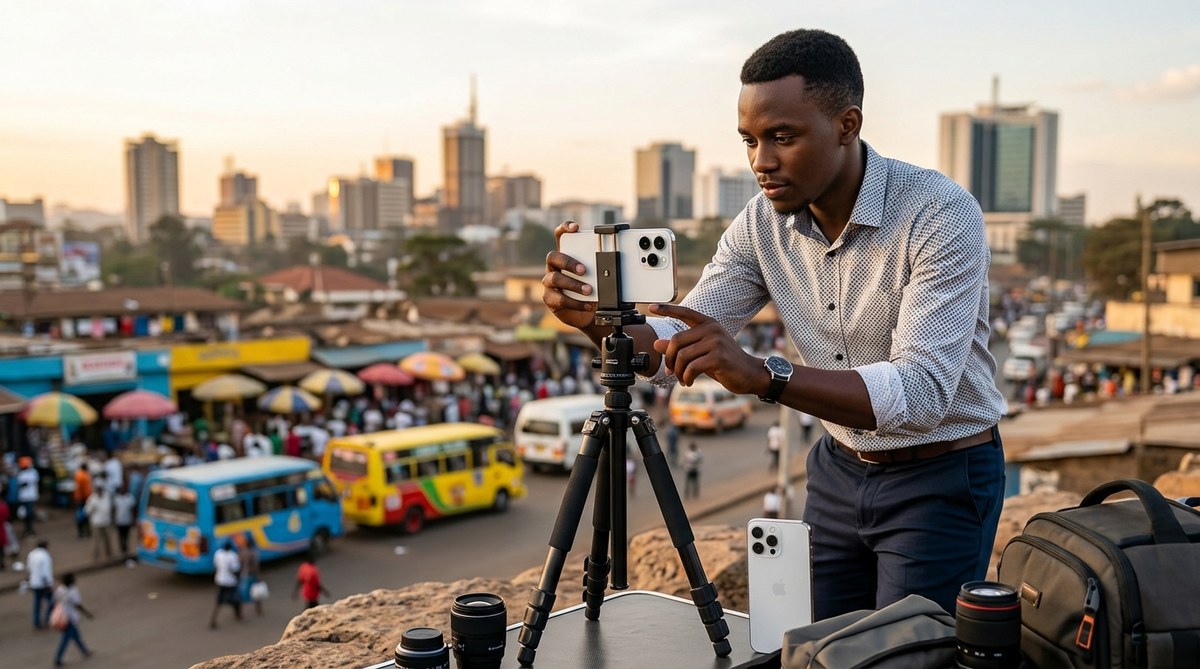
The African sun dips below the acacia trees and a cheetah pauses mid-stride against a golden sky. You have one chance to capture that moment. Your DSLR is packed away in the Land Cruiser, but your smartphone is already in your hand. In 2026, that phone can deliver professional-grade images if you choose the right one. The best smartphone for photography in Africa is no longer a compromise. It is a genuine tool for travel photographers who need portability, versatility, and incredible results in the most demanding conditions on earth.
The best smartphone for photography in Africa balances telephoto zoom, large sensor size, excellent low-light performance, and rugged battery life. For 2026, top contenders include the iPhone 17 Pro Max, Samsung Galaxy S26 Ultra, and Google Pixel 10 Pro. Your choice depends on whether you prioritize zoom reach, color science, or editing flexibility. Always pair your phone with a power bank and a protective case.
What Makes a Smartphone Great for African Photography
Africa throws everything at your camera. Dust, intense sunlight, sudden rain, and low light at dawn and dusk. You need a phone that can handle all of it. Here are the key specs to prioritize.
Sensor size and megapixels matter, but not in the way you think. A larger sensor captures more light. That helps in the dim hours of a game drive. Look for a main sensor at least 1/1.3 inches. For 2026, many flagships use a 1-inch type sensor. Megapixels over 50 MP can give you extra flexibility to crop in post, but only if the pixel binning algorithm is mature. iPhone and Google tend to produce natural results straight out of camera. Samsung and Xiaomi offer higher resolution modes for landscape shots.
Optical zoom is non-negotiable for wildlife. Digital zoom makes images soft. You need at least a 5x optical telephoto lens. The Samsung Galaxy S26 Ultra features a 10x optical zoom periscope lens. That is a game changer for capturing a leopard in a tree from 50 meters away. The iPhone 17 Pro Max has a 5x telephoto, which works well for larger animals and landscapes. If you plan to photograph birds or distant predators, prioritize zoom reach.
Battery life keeps you shooting all day. A safari day can start at 5 AM and end at 7 PM. A phone that dies by noon is useless. Look for a battery capacity above 5000 mAh. The Galaxy S26 Ultra and the Xiaomi 15 Pro both pack large batteries. Also consider fast charging support, because you may only have an hour to recharge between drives. Check our guide on how to extend your smartphone’s battery life in Africa’s harsh climate for more tips.
Durability and dust resistance. Dust is everywhere on dirt roads. Your phone needs an IP68 rating at minimum. A rugged case is essential, but the phone itself should be sealed. The iPhone 17 Pro Max uses ceramic shield glass and a titanium frame. Samsung’s Galaxy S26 Ultra has Armor Aluminum and Gorilla Glass Victus 3. Both are tough.
Low-light performance for golden hour and campfire scenes. Africa’s best light comes at sunrise and sunset. Computational photography has become incredibly advanced. Google Pixel 10 Pro’s Night Sight can pull detail from near darkness. iPhone’s Photonic Engine does the same with natural colors. For astrophotography in the Namib Desert, the Pixel remains the leader.
Top Smartphones for Photography in Africa in 2026
We tested the leading flagship phones under real African conditions: midday glare, dust storms, and the dim light of a bush dinner. Here are our top three picks.
iPhone 17 Pro Max
The iPhone 17 Pro Max is the safest choice for consistent color and video stability. Its new 48 MP main sensor captures rich detail. The 5x telephoto lens is good for medium-range wildlife. Video shooters will love the Cinematic mode and ProRes LOG recording. If you edit on a Mac later, the color grading is seamless.
Samsung Galaxy S26 Ultra
This phone is the zoom king. With a 200 MP main sensor and a 10x optical periscope, it brings distant subjects close without losing sharpness. The S26 Ultra also has a great ultrawide for landscape group shots on Mount Kilimanjaro. Its S Pen can be used as a remote shutter, which is handy for self-timer shots on a tripod.
Google Pixel 10 Pro
Google’s Pixel 10 Pro is the best computational photography device. It takes the least effort to get a stunning image. The Magic Editor and Real Tone features ensure accurate skin tones and balanced exposures, even in mixed light. It also has the best astrophotography mode. For a minimalist photographer who wants great shots straight to Instagram, this is the phone.
Here is a comparison table of key specs for these three models:
| Feature | iPhone 17 Pro Max | Samsung Galaxy S26 Ultra | Google Pixel 10 Pro |
|---|---|---|---|
| Main Sensor | 48 MP, 1/1.28″ | 200 MP, 1/1.3″ | 50 MP, 1/1.31″ |
| Optical Zoom | 5x | 10x | 5x |
| Battery | 4685 mAh | 5500 mAh | 5050 mAh |
| Durability | IP68, Titanium | IP68, Armor Aluminum | IP68, Gorilla Glass |
| RAW Support | ProRAW + Log | Expert RAW | RAW+ DNG |
| Weight | 227g | 233g | 210g |
All three phones will serve a travel photographer well. Your final choice depends on your shooting style. If you need extreme reach, go Samsung. If you want the most natural images with minimal editing, pick Google. If you are already in the Apple ecosystem for video and editing, stay with iPhone.
How to Choose Your Africa Photography Phone: A 5 Step Process
- List the type of shots you plan to take. Wildlife requires zoom. Landscapes need wide angle and dynamic range. Portraits of local people demand accurate skin tones. Prioritize the lens that matches your most common subject.
- Set a realistic budget. Flagships cost over $1000 in 2026. If that is too high, consider last year’s flagship or a mid-range phone with a good camera. Check the top 10 budget smartphones dominating the African market in 2026 for affordable options.
- Check local availability and service centers. Some brands have poor support in certain African countries. Samsung and iPhone have wide networks. Google Pixel is available in South Africa and Kenya but rarer elsewhere.
- Test the camera in challenging light. Before you buy, take test shots at dusk and in harsh midday sun. Look for noise, lens flare, and dynamic range.
- Buy a backup power solution. A phone with great cameras is useless dead. Get a 20000 mAh power bank and a solar charger. Read our how to extend your smartphone’s battery life in Africa’s harsh climate guide for specifics.
Essential Accessories for Smartphone Safari Photography
- A sturdy tripod with a phone mount (for long exposures and night sky shots).
- A clip-on telephoto lens if your phone has only 3x zoom.
- A protective case with a lanyard to avoid dropping it from a vehicle.
- A screen protector (glass, not plastic, for clarity).
- A waterproof pouch for river crossings or boat safaris.
- An app like Lightroom Mobile or Snapseed for on-the-go editing.
“I’ve shot magazine covers with the Samsung Galaxy S26 Ultra in Botswana. The 10x zoom lets me frame a lion’s face from 80 meters away without disturbing it. The key is to shoot in RAW and tweak exposure in post. Never rely on auto mode when you want professional results.” – Anna Krohn, wildlife photographer
Common Mistakes and How to Avoid Them
| Mistake | Solution |
|---|---|
| Using digital zoom | Always use optical zoom. Move closer if possible. |
| Forgetting to clean the lens | Wipe it with a microfiber cloth after every dusty drive. |
| Shooting in JPEG only | Shoot RAW+JPEG for maximum editing flexibility. |
| Not using burst mode for action | Hold the shutter for burst shots of moving animals. |
| Relying on HDR in bright sun | Use manual exposure or shadow control instead. |
What About Android vs iOS?
Both platforms offer excellent cameras. The main difference is workflow. If you use a Mac or iPad for editing, iPhone integrates smoothly. If you prefer file management and expandable storage via microSD, Samsung gives you that. Google Pixel runs stock Android with the best Google Photos integration. For a travel photographer, the OS is less important than the lens system. Choose the phone that matches your shooting style.
The Future of Smartphone Photography in Africa
Smartphone cameras are only getting better. In 2026, we are seeing periscope zoom lenses reach 15x optical on some prototypes, and AI processing that can remove dust spots or haze automatically. African consumers are shaping this innovation by demanding phones that perform in extreme heat and low connectivity. To stay ahead of trends, read about emerging smartphone features transforming connectivity in Africa and how African consumers are shaping the future of smartphone innovation in 2026.
Your Safari Starts with the Right Phone
You do not need a bulky camera bag to come home with wall-worthy photos. The best smartphone for photography in Africa is the one that fits your hand, your budget, and your visual style. Whether you choose the iPhone 17 Pro Max for video, the Samsung Galaxy S26 Ultra for zoom, or the Google Pixel 10 Pro for effortless editing, the real magic happens when you are present in the moment. Pack your phone, charge your batteries, and go capture the wild. Africa is waiting.