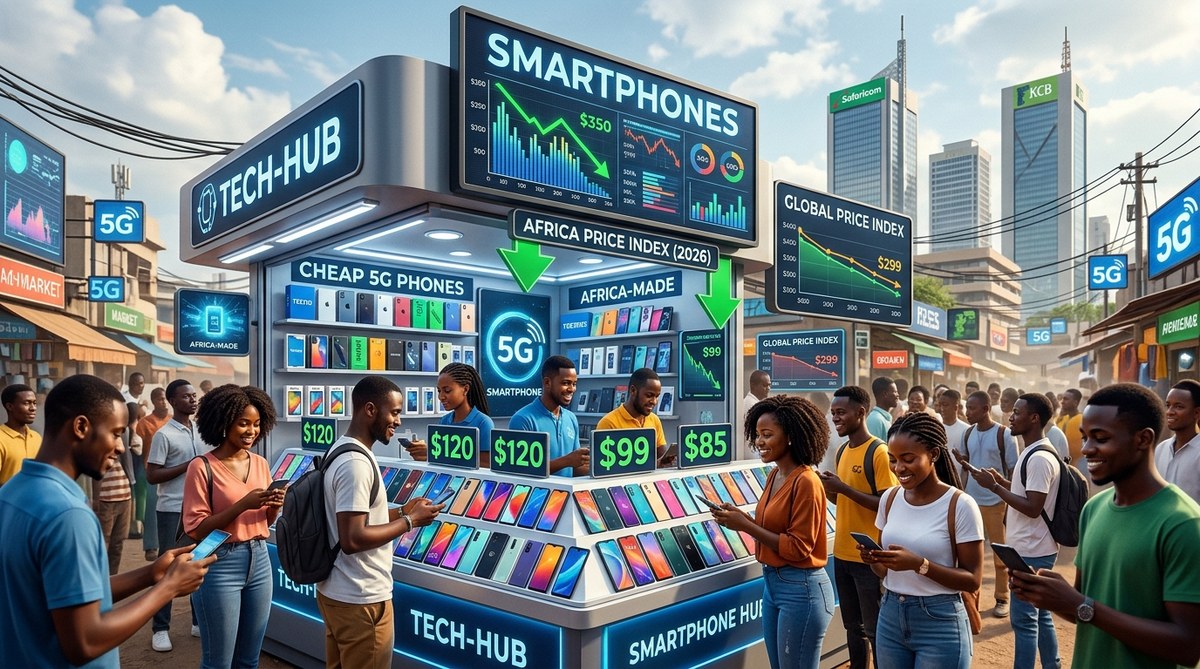
Smartphones in Africa are getting cheaper. Not just a little cheaper. In 2026, the price drops are outpacing every other major market on the planet. If you are an importer, an analyst, or someone who simply wants a decent phone without breaking the bank, this trend is impossible to ignore. The old story was that Africa always paid more for tech. That story is changing. Today, the continent is becoming the most affordable place to buy a new smartphone, and the reasons go far beyond simple global supply chains.
Africa smartphone prices dropping 2026 is not a fluke. A perfect storm of local assembly plants, fierce competition between Chinese and Indian brands, falling memory chip costs, and new device financing models has pushed entry-level phone prices down by as much as 30% year-over-year in key markets like Nigeria, Kenya, and Ghana. This is reshaping who can afford a connected life.
The Three Forces Driving Prices Down
The price drop is not happening by accident. Three major forces are colliding in 2026 to create what analysts are calling a deflationary moment for African mobile.
Local Assembly Is Cutting Import Taxes
Governments across the continent have pushed hard for local assembly. Countries like Egypt, Nigeria, Kenya, and South Africa now host plants that screw together phones from imported parts. The result is a massive reduction in import duties. A phone assembled in Lagos can cost 15% to 25% less than the same model shipped fully built from Asia.
This is not just about labor savings. It is about tariff policy. When a government slaps a 30% duty on a fully assembled phone but only 5% on components, the math changes overnight. Local assemblers win. Consumers win.
Brand Competition Has Never Been Fiercer
Chinese brands like Transsion, Xiaomi, and Realme are fighting for market share. Indian brands are entering the fray. Samsung and Oppo are defending their turf with aggressive pricing. This competition is great for buyers.
In 2026, the sub-$100 segment is the battlefield. Brands are launching models with features that would have cost $250 just three years ago. Large screens, decent cameras, and long battery life are now standard in budget devices. The fight for the next billion users is happening in Africa, and the weapon of choice is a low price tag.
Memory and Chip Costs Are Normalizing
The global memory shortage that hammered prices in 2024 and 2025 has eased. DRAM and NAND prices have fallen sharply. Since memory accounts for a big chunk of a budget phone’s cost, this drop flows directly to the consumer. The boom in AI infrastructure soaked up a lot of chip supply in the last two years, but new fabrication plants are now online. Supply is catching up.
How to Spot the Best Deal in 2026
Not every cheap phone is a good phone. Here is a practical process for evaluating a budget smartphone in Africa this year.
- Check the processor generation. Avoid anything older than a MediaTek Dimensity 700 series or a Qualcomm Snapdragon 4 Gen 2. Older chips drain battery faster and lack modern modem support.
- Verify the memory type. Look for LPDDR4X or LPDDR5. Older LPDDR4 phones will feel sluggish with modern apps.
- Test the network bands. Make sure the phone supports the specific LTE and 5G bands used by your local carrier. A phone that works in Nairobi might struggle in Accra.
- Read warranty terms carefully. Some cheap phones have no local service center. If it breaks, you are stuck.
- Compare prices across at least three online marketplaces. Price differences of 15% are common for the same model.
What to Look For in a Budget Smartphone
Use this table to weigh the tradeoffs between price and performance.
| Feature | Budget Pick (Under $80) | Mid-Range Pick ($80 to $150) | Why It Matters |
|---|---|---|---|
| Processor | MediaTek Helio G series | Dimensity 700 or Snapdragon 4 Gen 2 | App loading speed and future updates |
| RAM | 3GB or 4GB LPDDR4 | 6GB or 8GB LPDDR4X | Multitasking and smooth browsing |
| Storage | 32GB eMMC | 64GB or 128GB UFS | Space for apps and photos |
| Battery | 4000mAh | 5000mAh or higher | All-day use without charging |
| Screen | 6.5 inch LCD, 720p | 6.7 inch IPS LCD, 1080p | Video quality and outdoor visibility |
| OS | Android 13 (Go edition) | Android 14 (full version) | Security patches and app support |
The Role of Device Financing
Cash is still king in many African markets, but that is changing fast. Device financing programs are making smartphones accessible to people who cannot pay the full price upfront.
“We are seeing more people buy a $70 phone on a 12-week payment plan than we ever saw pay $70 in one go. The monthly cost of $6 is something a small trader can afford from a single day’s profit.”
* Ahmed Mohamud Yusuf, founder of a Somali device financing platform
These programs are not just for expensive flagships. They work best for budget phones. The monthly payment is low enough to fit into a household budget, and the phone enables income-generating activities like mobile money, market research, and social selling.
Common Mistakes When Shopping for a Cheap Phone
Even with falling prices, you can still waste money. Here are the pitfalls to avoid.
- Ignoring the operating system version. Some ultra-budget phones ship with Android 13 Go, which lacks full app store access and security updates. You want the full version.
- Buying a phone that lacks dual SIM support. In many African countries, people use one SIM for calls and another for data. A single-SIM phone limits your flexibility.
- Falling for fake storage. Counterfeit memory is common. A phone claiming 128GB of storage might have only 32GB. Run a storage test before you pay.
- Forgetting about the charger. Many budget phones ship without a fast charger. Factor in the cost of buying one separately.
- Not checking for local repair shops. If the brand has no parts supply in your country, a broken screen means a dead phone.
Why This Trend Matters for Importers and Analysts
For importers, the dropping prices mean thinner margins on hardware but bigger volumes. The total addressable market is expanding. More people can afford a phone today than could last year. Importers who focus on high volume, low margin models are winning.
For analysts, the trend signals a structural shift. Africa is no longer a dumping ground for last-year’s models. The continent is getting the same budget phones that launch in Asia, often at lower prices due to local assembly incentives.
For budget-conscious consumers, the message is simple: 2026 is the best year in history to buy a smartphone in Africa. Prices are still falling. The quality floor is rising.
A Look at the Numbers
The data from market intelligence firm Omdia shows that the average selling price of a smartphone in Sub-Saharan Africa dropped by 18% in the first half of 2026 compared to the same period in 2025. In Nigeria, the drop was 24%. In Kenya, 21%. These are not small changes.
The sub-$100 segment now accounts for over 60% of all smartphone sales on the continent. That is up from 45% in 2024. The cheap phone is no longer a niche. It is the mainstream.
What Is Still Expensive
It would be dishonest to say everything is cheap. Premium phones from Apple and Samsung still cost more in Africa than in Europe or the US. Import taxes, currency volatility, and low volume keep flagship prices high.
But the gap is closing. Even some premium models are seeing price cuts as brands try to capture market share. The real action, however, is in the budget aisle.
The Future of Smartphone Technology in Africa
The trends we are seeing in 2026 will likely accelerate. More local assembly plants are planned for Ethiopia, Rwanda, and Ghana. The African Continental Free Trade Area is making it easier to move phones across borders without heavy tariffs.
Device financing is becoming more sophisticated. New fintech apps allow users to build credit scores by paying phone installments on time. This opens the door to financing for other goods.
For a deeper look at what devices are leading the market, check out our list of the top 10 budget smartphones dominating the African market in 2026. And if you are an entrepreneur looking to equip your team, our guide on how to choose the right smartphone for your business in Africa will save you money.
What This Means for Your Next Purchase
Africa smartphone prices dropping 2026 is not a headline that will fade. It is a new reality. The forces of local assembly, brand competition, and falling component costs are not temporary. They are structural.
If you have been waiting to buy a new phone, stop waiting. The prices are good. The selection is wide. The quality is better than ever. Find a model that fits your needs, check the warranty, and make the purchase. The digital economy is waiting for you.