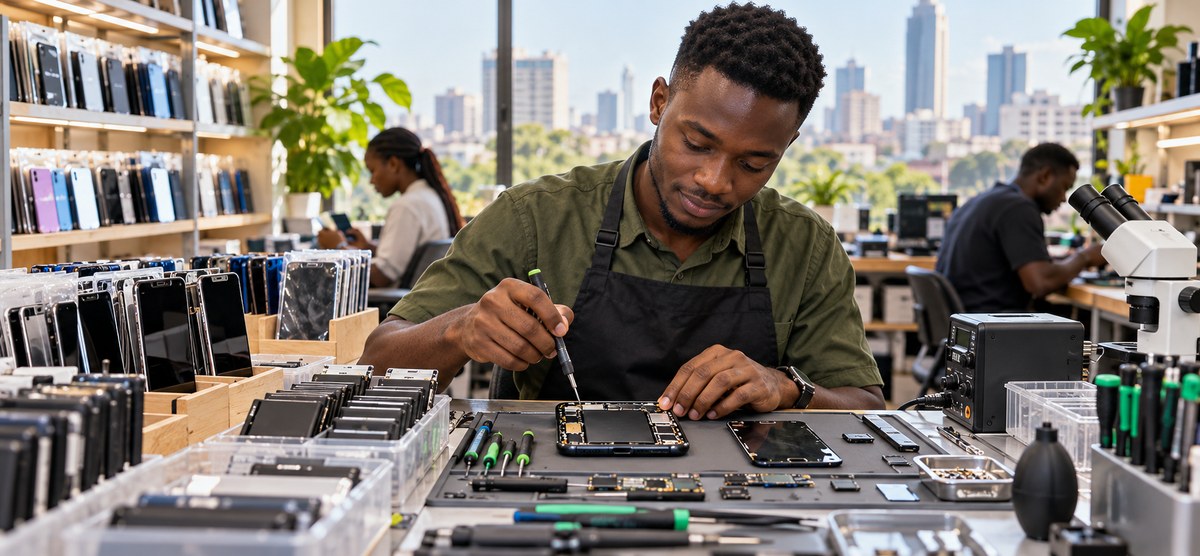
For years, fixing a broken screen or a dead battery in Africa meant either paying nearly the price of a new phone or mailing the device overseas and waiting weeks. That reality has shifted in 2026. A combination of local assembly plants, a flood of high-quality third-party parts, and a new wave of specialized repair startups has driven costs down across the continent. If you have been holding onto a cracked phone out of fear of the repair bill, now is the time to take another look.
Smartphone repairs in Africa are becoming affordable in 2026 due to three main factors: local manufacturing of spare parts, the rise of specialized repair chains, and increased competition among technicians. Screen replacements that cost $80 in 2023 now run $25 to $40. Battery swaps have dropped below $15 in many cities. This shift means fewer phones end up in landfills and more people can keep their devices running longer.
The Old Reality of Expensive Repairs
Not long ago, getting a smartphone repaired in Africa was an exercise in frustration. Official service centers were rare outside of capital cities. When you found one, the price for a simple screen replacement often exceeded $100. Third-party shops offered lower prices, but they frequently used low-quality parts that failed within months.
The problem was rooted in supply chains. Most spare parts had to be shipped from Asia or Europe. Import duties, shipping fees, and currency fluctuations added layers of cost. A single phone screen might pass through three different distributors before reaching a repair shop in Lagos or Nairobi. Each middleman added a markup.
This created a difficult situation for consumers. Many people chose to live with a cracked screen or a swollen battery rather than pay for a repair that cost half the value of the phone. In 2023, a survey by a Kenyan tech blog found that nearly 40 percent of smartphone owners in urban areas had a damaged device they had not repaired for more than six months.
Three Forces Driving Down Costs in 2026
Local Assembly Changes Everything
The biggest factor behind affordable smartphone repairs Africa 2026 is the growth of local assembly. Countries like Kenya, Nigeria, South Africa, and Ghana now host factories that assemble popular phone models from imported components. These factories need a steady supply of spare parts for warranty repairs. That demand has encouraged global parts manufacturers to set up regional warehouses.
When a parts warehouse exists in Nairobi instead of Shenzhen, the cost of a replacement screen drops immediately. Shipping time goes from weeks to days. Import duties shrink because the parts enter the country as components for assembly, not as finished consumer goods. Repair shops can now buy genuine or high-quality compatible parts at wholesale prices.
Consider the price of a Galaxy A14 screen. In 2023, a genuine replacement cost around $75 in Accra. In 2026, the same screen costs $28 at a reputable repair shop. The difference is almost entirely due to local parts availability.
The Rise of Specialized Repair Chains
A second major change is the emergence of dedicated repair chains. Companies like PhoneFix Africa and RepairHub have opened dozens of locations across major cities. These are not the dusty backstreet shops of the past. They are clean, organized stores with standardized pricing and trained technicians.
These chains benefit from bulk purchasing power. They order thousands of screens, batteries, and charging ports at once. That volume lets them negotiate prices that independent shops cannot match. They also invest in proper tools. A heat gun, a precision screwdriver set, and a suction cup for screen removal cost money upfront, but they prevent damage during repairs and reduce the need for replacement parts.
For consumers, the result is predictable pricing. A battery replacement for a Tecno Spark 10 costs $12 at any PhoneFix location in Lagos. You do not need to haggle. You do not need to worry about being overcharged because you look like a tourist. The price is posted on the wall.
Competition Among Independent Technicians
The third force is simple economics. More people are training as phone technicians. YouTube tutorials and online courses have made it easier to learn repair skills. A new generation of technicians has set up shop in markets, bus stations, and street corners.
Increased supply of repair services has pushed prices down. In 2026, a screen replacement for a popular budget phone like the Nokia C22 costs between $20 and $35 in most African cities. That is a fraction of the $150 to $200 you would have paid at an official service center in 2022.
How to Get the Best Repair Deal in 2026
If you need a repair, follow this simple process to save money and avoid headaches.
-
Get three quotes. Visit at least two chain stores and one independent technician. Prices can vary by 40 percent for the same job. Do not accept the first price you hear.
-
Ask about the part origin. A good technician will tell you if the screen is OEM (original equipment manufacturer), high-quality compatible, or budget grade. For most people, a high-quality compatible part is the best value. It costs less than OEM but works just as well for everyday use.
-
Check the warranty. Reputable shops offer a 30 day to 90 day warranty on parts and labor. If a shop refuses to guarantee their work, walk away.
-
Watch the repair. If possible, stay and watch the technician work. This prevents part swapping and lets you learn a little about your device. Most chain stores have waiting areas where you can see the repair bench.
-
Test before you pay. Turn on the phone. Check the touch sensitivity. Make a call. Test the camera and speakers. Do not hand over cash until you are satisfied.
Common Mistakes That Cost You Money
Even with lower prices, you can still waste money if you are not careful. Here are the most common mistakes people make when seeking affordable smartphone repairs Africa 2026.
| Mistake | Why It Hurts | Better Approach |
|---|---|---|
| Choosing the cheapest quote without research | The lowest price often means a used or counterfeit part that will fail in weeks | Pay a little more for a shop that offers a warranty and uses known parts |
| Going to an official brand store for out of warranty devices | Official stores charge premium rates and may push you to buy a new phone | Use a third party shop that specializes in your phone model |
| Ignoring minor issues until they become major | A small crack can let dust and moisture destroy the internal display | Get small fixes done early to avoid expensive full replacements |
| Buying a new phone instead of repairing | New budget phones cost $80 to $150, but a repair might only be $25 | Compare the repair cost to 30 percent of the phone’s current value; if repair is cheaper, fix it |
| Letting a friend “who knows phones” attempt the repair | Amateur repairs often cause more damage, especially with glued screens | Pay a professional $10 to $20 and save yourself the risk of a broken device |
What Repair Shop Owners Should Know
If you run a repair business, 2026 is a good year to grow. The market for affordable smartphone repairs Africa 2026 is expanding rapidly. Here is what successful shops are doing differently.
They stock parts for the top five selling phones in their region. In East Africa, that list usually includes models from Tecno, Samsung, Nokia, and Oppo. In West Africa, brands like Itel and Gionee are also popular. Knowing which phones people actually carry in your city is more important than carrying parts for every model.
They offer pickup and delivery services. In cities like Nairobi and Accra, traffic is brutal. Customers will pay a small fee to have their phone picked up, repaired, and dropped off. This service builds loyalty and increases the volume of repairs you can complete in a day.
They invest in diagnostic tools. A $50 multimeter and a $100 battery tester can help you identify problems accurately. When you tell a customer exactly what is wrong and show them the evidence, they trust you more. Trust leads to repeat business and referrals.
They partner with local phone sellers. A repair shop that sits next to a phone retailer can capture customers who just bought a device. Offer the retailer a small commission for every customer they send your way. This partnership costs almost nothing and brings steady walk in traffic.
“The repair business in Africa is no longer about finding a part and charging whatever you want. It is about speed, transparency, and building a reputation. Customers in 2026 have options. They will go to the shop that treats them fairly.” – Emmanuel Osei, founder of RepairHub Ghana
The Parts Landscape in 2026
Understanding the parts market helps both consumers and shop owners make better decisions. Here is a breakdown of the main types of parts you will encounter.
-
OEM parts. These come from the original phone manufacturer. They are the most expensive option but offer guaranteed fit and performance. Use these for premium phones or devices still under warranty.
-
High-quality compatible parts. These are made by third party factories that meet or exceed OEM specifications. They cost 30 to 50 percent less than OEM parts. For most repairs, these are the best choice. Brands like KingSpec and IVerdi produce reliable screens and batteries.
-
Budget compatible parts. These are cheap, often made from recycled materials or lower grade components. They may work for a few months but tend to fail quickly. Avoid these if you plan to keep your phone for more than a year.
-
Refurbished parts. These are pulled from broken or discarded phones that have been tested and repaired. They can be a good deal for older models where new parts are hard to find. Always test refurbished parts before installation.
Why This Matters for the African Tech Ecosystem
Lower repair costs do more than save individuals money. They reduce electronic waste, extend the life of devices, and support local jobs. When a phone can be repaired for $30 instead of being thrown away, fewer toxic batteries and screens end up in landfills. That is good for the environment.
Cheaper repairs also make smartphones more accessible to low income users. A family that cannot afford a $150 phone might be able to buy a used device for $60 and keep it running for years with $20 repairs. This widens access to mobile banking, education apps, and communication tools.
For entrepreneurs, the repair boom creates opportunities. A small shop in a busy market can generate a solid income with low startup costs. A technician with a smartphone and a basic tool kit can start offering mobile repair services. The barrier to entry is lower than it has ever been.
What to Expect Next
The trends driving affordable smartphone repairs Africa 2026 are not going away. Local assembly will continue to expand. More spare part factories will open on the continent. Repair chains will move into smaller cities and rural towns. Prices will likely drop another 10 to 15 percent over the next two years.
If you are a consumer, this is the year to stop tolerating a broken phone. If you are a business owner, this is the year to invest in your repair operation. The market is growing, and the customers are ready.
A Final Word on Keeping Your Phone Healthy
Even with cheap repairs, it is better to avoid damage in the first place. Use a screen protector. Buy a sturdy case. Keep your phone out of direct sunlight and away from water. Charge it with the cable that came in the box, not a $2 knockoff. These small habits can add years to your phone’s life and keep you out of the repair shop.
But when something does break, remember that 2026 is different. You no longer have to choose between a broken phone and an empty wallet. Affordable smartphone repairs Africa 2026 are real. Find a good shop, ask the right questions, and get your device back in working order.