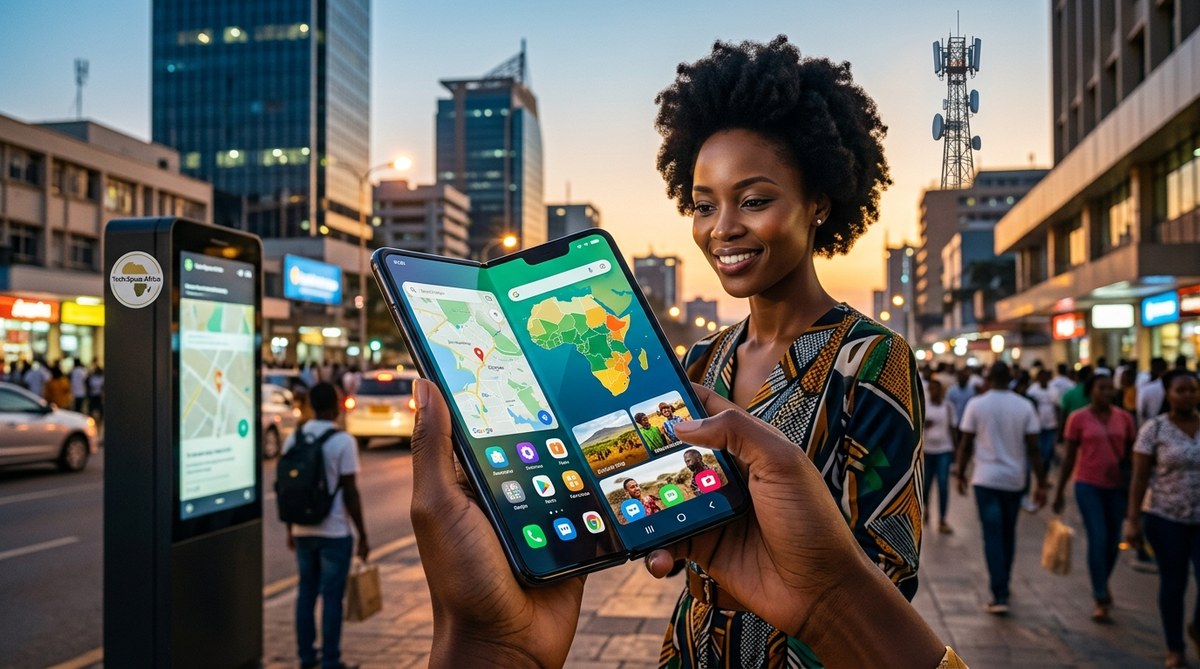
Foldable smartphones have moved from flashy prototypes to real devices you can buy in stores. Samsung, Huawei, Tecno, and others are now pushing them into African markets. The question on everyone’s mind: Are foldable smartphones Africa’s next big thing? The answer is more complex than a simple yes or no.
Foldable smartphones combine portability and large screen space. This fits Africa’s mobile first population well. High prices and durability remain barriers but local assembly could lower costs. Growing middle class seeks multitasking devices. Early adopters among professionals and content creators show interest. Mass adoption needs time. However 2026 sees more durable affordable models entering the market. The potential is clear but patience required. Local brands are joining the race. Exciting times ahead.
The Current State of Foldable Smartphones in Africa
Global shipments of foldable phones crossed 20 million units in 2025, and 2026 is shaping up to be even bigger. In Africa, the story is still early. Most foldables available today are premium devices like the Samsung Galaxy Z Fold series or the Huawei Mate X, priced well above $1,000. That puts them out of reach for the average consumer.
But something is shifting. Chinese brands like Tecno and Xiaomi have started launching lower cost foldables specifically designed for emerging markets. Tecno’s Phantom V Fold, for example, launched at around $900 and quickly gained attention in Nigeria and Kenya. Local distributors are also beginning to offer installment plans, making the upfront cost less intimidating.
Meanwhile, the continent’s mobile first economy means many people rely solely on their phone for work, entertainment, and banking. A device that can be both a phone and a tablet has clear appeal. Professionals often juggle multiple apps, and creators need a bigger canvas for editing videos or photos. Foldables address these needs directly.
Why Africa Could Be the Perfect Market for Foldables
Several factors make Africa a natural home for foldable technology:
- Mobile first lifestyle: Most Africans access the internet exclusively through smartphones. A foldable that unfolds into a tablet removes the need for a separate device.
- Young demographics: Over 60% of Africa’s population is under 25. Younger users tend to adopt new tech faster and value devices that stand out.
- Content consumption: Streaming video, social media, and mobile gaming are exploding. A larger screen on a pocket sized device enhances the experience.
- Entrepreneurial culture: Small business owners often use their phone for invoicing, inventory, and client communication. The multitasking capabilities of foldables are a real productivity boost.
- Status symbol: In many African markets, owning a premium smartphone carries social cachet. A foldable is an even stronger statement.
Local smartphone brands are also taking notice. Companies like Infinix and TECNO have already started experimenting with foldable designs. As they ramp up local assembly, prices could drop significantly. This would be a game changer.
To get a fuller picture of the broader smartphone landscape, check out our guide on top 10 budget smartphones dominating the African market in 2026. It shows where most consumers still spend their money and how foldables compare on value.
Challenges That Stand in the Way
Foldables are not without problems, especially in African conditions. Here is a comparison of key factors:
| Factor | Traditional Smartphone | Foldable Smartphone |
|---|---|---|
| Price | $100 to $600 (mainstream) | $800 to $2,000+ |
| Durability | Very good, drop resistant cases available | Hinges and flexible screens are more fragile |
| Dust and water resistance | Often IP68 rated | Usually IPX8 (no dust rating) |
| Battery life | Good to excellent | Average, smaller batteries due to thin design |
| Repairability | Widely available parts and cheap labor | Specialized repairs, expensive and scarce in Africa |
| Screen protection | Gorilla Glass, easily replaceable | Plastic or ultra thin glass, scratches easily |
| Software support | Years of updates from major brands | Still catching up, but improving |
A major worry is dust and heat. Many regions in Africa have dusty environments and high temperatures. Foldable hinges can collect grit over time. The flexible screen may also degrade faster under intense sunlight. Tecno has tried to address this with a special coating, but long term reliability remains unclear.
Repair networks are another hurdle. If a foldable screen breaks, you cannot just walk into a local phone repair shop. Parts must be imported, and technicians need training. This can leave users without a device for weeks.
As one mobile industry analyst put it:
“For foldables to truly take off in Africa, brands must invest in after sales support. A $1,200 phone is useless if you cannot get it fixed locally. The winners will be those who build repair ecosystems alongside their hardware.”
5 Steps to Decide if a Foldable Smartphone Is Right for You
Not everyone should rush out to buy a foldable. Here is a practical checklist to help you decide.
-
Assess your daily usage. Do you regularly switch between a phone and a tablet? Do you edit documents or videos on your phone? If yes, the multitasking potential of a foldable could save you time.
-
Check local warranty and service options. Before buying, call the brand’s service center in your country. Ask about screen repair costs and turnaround time. Some brands like Samsung offer walk in service in major cities like Nairobi, Lagos, and Johannesburg.
-
Consider your environment. If you work outdoors or in a dusty area, a foldable may need extra care. A rugged case and a screen protector are non negotiable. Some users keep their foldable in a protective pouch.
-
Compare total cost of ownership. A $1,000 foldable might need a $300 screen repair after a year. Add that to the price, and you might be better off with a premium traditional phone plus a budget tablet. Run the numbers.
-
Watch for local brand offerings. Tecno, Infinix, and Xiaomi are likely to release more affordable foldables in 2026. Waiting could get you a better deal with local support. Keep an eye on releases targeted at the African market.
If you are an entrepreneur, you might also want to read our how to choose the right smartphone for your business in Africa guide. It weighs factors like battery life, camera quality, and expandable storage, which matter for business owners.
The Big Question: Are Foldables the Next Big Thing?
Yes and no. For the premium segment, foldables are already becoming the new normal in 2026. Tech enthusiasts, early adopters, and high earning professionals in cities like Accra, Nairobi, and Cape Town are embracing them. Sales are rising each quarter.
For the mass market, the answer is still “not yet”. The average smartphone price in Africa is around $150. Foldables cost four to ten times that. Until prices fall below $500, they will remain a niche product. However, we are seeing a trend of price drops faster than expected. Samsung’s Galaxy Z Flip series now starts at $700 in some regions. Tecno’s next foldable might hit $600.
Another factor is the growth of 5G networks. Foldables are typically 5G capable, and as 5G expands across Africa, the demand for devices that can fully use that speed will increase. Streaming high resolution video, cloud gaming, and video calls all benefit from a larger, foldable screen.
We also see that African consumers are shaping the way phone makers design foldables. Our article on how African consumers are shaping the future of smartphone innovation in 2026 covers how feedback on battery life and durability is influencing new models.
Tying It All Together for Your Decision
Foldable smartphones are not a passing fad. They represent a genuine evolution in mobile computing. For African users, they offer a way to do more with one device in a world where the phone is already the center of digital life.
But every new technology takes time to mature. If you are the kind of person who loves being on the leading edge and can afford the premium, 2026 is a great year to try a foldable. If you prefer value and reliability, wait another year or two. Either way, the foldable era in Africa has begun, and it will only grow.
As you think about your next phone, consider what matters most to you: screen size, portability, durability, or cost. There is no wrong answer, just the right fit for your life. For more insights on the broader changes happening in the mobile space, look at our piece on emerging smartphone features transforming connectivity in Africa. It explains how innovations like foldables fit into the big picture.
No matter what you choose, the best phone is the one that helps you work, create, and connect without frustration. Foldables are getting closer to that ideal every year. And that is exciting.