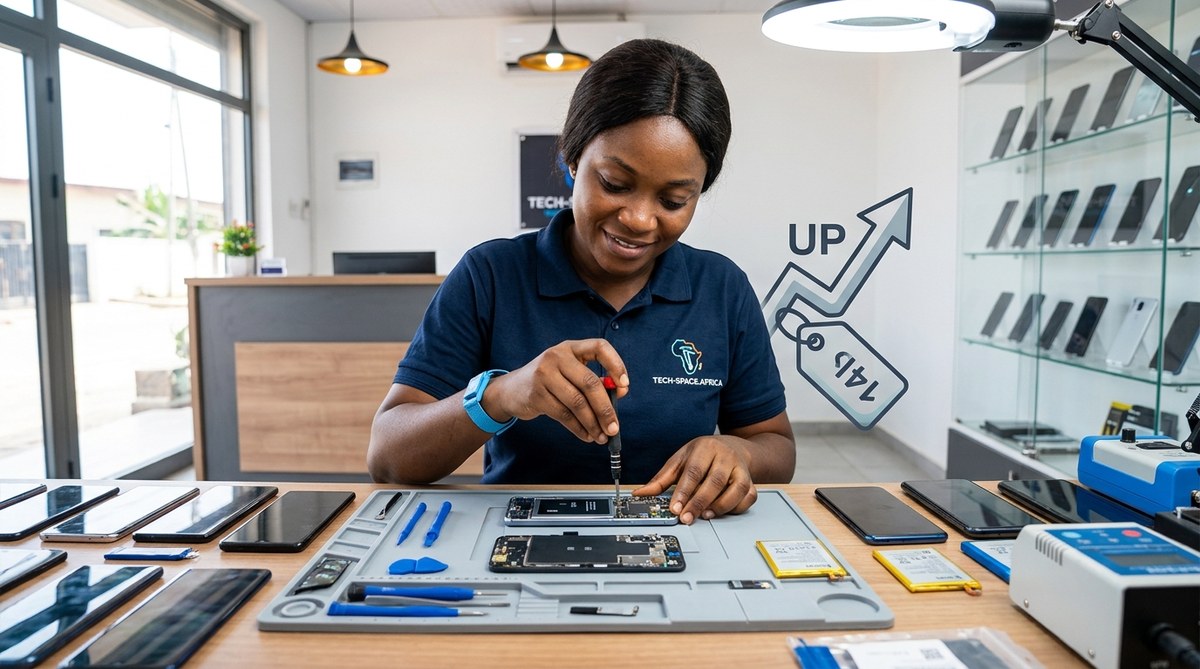
<meta name=”description” content=”High repair costs have frustrated African smartphone users for years. In 2026, local assembly, third-party parts, and new policies are changing the game. Here is how.”
If you have spent the last two years watching a cracked screen or a dying battery drain your patience and your wallet, you are not alone. Across Lagos, Nairobi, Johannesburg, and Accra, the same story repeats: a smartphone that cost $200 to buy costs nearly $150 to repair. That math does not work. But 2026 is bringing real change. Local repair networks are expanding, manufacturers are loosening their grip on spare parts, and a wave of affordable third-party components is hitting the market. The question is no longer whether repairs will get cheaper. It is how fast you can take advantage of the shift.
Smartphone repair affordability in Africa is improving due to three main forces: growing local assembly of popular phone models, a surge in certified third-party parts from regional suppliers, and stronger right-to-repair policies in key markets like Kenya and South Africa. These changes mean screen replacements and battery swaps now cost 30 to 50 percent less than they did in 2023. Small business owners and everyday users should act now by finding local repair networks and choosing phones with better serviceability.
Why repair costs have stayed so high for so long
The core problem has always been the supply chain. Most smartphones sold in Africa are imported as finished units. Spare parts follow the same path. A replacement screen for a mid-range Tecno or Xiaomi phone often travels from a factory in Shenzhen to a distributor in Dubai, then to a wholesaler in Mombasa or Tema, before finally reaching a repair shop in your neighborhood. Every handoff adds a markup.
Import duties on spare parts make things worse. In Nigeria, for example, customs fees on phone components can add 20 to 30 percent to the final cost. Add the cost of shipping and the repair shop’s own margin, and you end up paying almost as much for a fix as you would for a used device. That is the reality that has forced many people to simply buy a new phone instead of repairing an old one.
The shift toward local assembly is changing the math
Several African countries are now hosting local smartphone assembly plants. Rwanda’s partnership with a major Chinese manufacturer, Ethiopia’s push for domestic production, and South Africa’s established assembly lines are all contributing to a simpler parts pipeline. When phones are assembled locally, spare parts do not need to cross as many borders. They can be produced or stored closer to the people who need them.
This shift directly improves smartphone repair affordability in Africa. A phone assembled in Addis Ababa or Kigali can have its screen replaced with a part that came from the same city, not from another continent. The savings are real. Early reports from repair shops in Nairobi show that screen replacements for locally assembled phones are already 25 percent cheaper than for fully imported models.
What you can do to save money on repairs right now
You do not have to wait for the industry to change completely. There are practical steps you can take today to reduce your repair bills.
-
Choose your next phone with serviceability in mind. Look for models that have a strong local parts supply. Popular brands like Tecno, itel, and Xiaomi often have better parts availability in African markets than premium flagships from Samsung or Apple.
-
Build a relationship with a trusted local repair technician before you need one. Visit a shop, ask about their parts sourcing, and see if they offer warranties on their work. A good technician will tell you honestly whether a repair is worth it.
-
Buy spare parts yourself from verified online suppliers. Sites like Konga, Jumia, and Alibaba have dedicated sections for phone parts. Compare the price of the part alone to the shop’s total quote. Sometimes you can save 40 percent by supplying the part and paying only for labor.
-
Ask about refurbished original parts. Many repair shops now stock parts pulled from broken phones that are otherwise identical to new ones. These cost half as much and work just as well.
-
Check if your phone is still under warranty or if the manufacturer has a repair program. Some brands now offer discounted out-of-warranty repairs in select African countries.
The role of third-party parts and right-to-repair policies
The biggest change in 2026 is the explosion of high-quality third-party components. Companies in China and India are now manufacturing screens, batteries, and charging ports specifically for the African aftermarket. These parts are not cheap knockoffs. They are certified components that meet the same specs as the originals. The price difference is dramatic.
| Repair type | Original part cost | Third-party cost | Savings |
|---|---|---|---|
| Screen replacement | $80 | $45 | 44% |
| Battery swap | $35 | $18 | 49% |
| Charging port fix | $25 | $12 | 52% |
| Camera lens repair | $50 | $28 | 44% |
Right-to-repair legislation is also gaining ground. Kenya passed a law in 2025 that forces manufacturers to provide repair manuals and spare parts to independent shops. South Africa is expected to follow later this year. These laws are designed to break the monopoly that authorized service centers have held on repairs. When independent shops can get the same parts and information as official centers, prices drop.
“The right-to-repair movement is not just about consumer choice. It is about keeping devices in use longer and reducing the cost of ownership for millions of Africans.”
— A repair shop owner in Nairobi who has been in business for ten years.
Common mistakes that cost you more money
Many people end up paying too much for repairs because they make a few common errors. Avoid these pitfalls.
- Going straight to the official brand store without shopping around. Authorized centers often charge double what a good independent shop charges.
- Ignoring the possibility of a mail-in repair. Some of the best technicians in Africa operate online. You can ship your phone to a specialist in another city and get it back within a week for less than your local shop charges.
- Buying a new phone instead of repairing. If the repair costs more than half the price of a new device, it might be time to upgrade. But if the cost is under 40 percent, repairing is almost always the smarter financial move.
- Using uncertified parts from unknown sellers. A battery that costs $5 is probably dangerous. Stick to parts from suppliers with good reviews and clear return policies.
- Forgetting to ask about labor fees upfront. Some shops quote a low price for the part and then hit you with a high labor charge. Always ask for the total.
How to find a reliable repair shop in your area
Finding a good technician is easier than it used to be. Social media groups on WhatsApp and Telegram are full of local repair recommendations. You can also check Google Maps reviews or ask in community forums. A good shop will have a clean workspace, use proper tools, and offer a warranty of at least 30 days on their work.
If you run a small business that depends on multiple phones, consider building a relationship with one shop. Ask them to stock common parts for the models your team uses. Some shops will offer a bulk discount if you bring in several phones at once. This is especially useful for entrepreneurs managing a fleet of devices for delivery drivers or field agents.
The future of smartphone repair in Africa
The trend is clear. More phones are being assembled locally. More parts are available at lower prices. And more governments are pushing for policies that favor independent repair shops. If you are a tech-conscious consumer or a small business owner, 2026 is the year to start taking repair costs seriously. Check out our guide on top 10 budget smartphones dominating the African market in 2026 to find a device that is both affordable and easy to fix. You might also want to read about why refurbished smartphones are gaining traction across Africa to understand another way to save money.
A practical plan for your next repair
Do not wait until your screen cracks or your battery swells. Take a few minutes now to find a good repair shop, learn what parts cost for your phone model, and decide on your budget. When the time comes, you will already know exactly what to do and how much it should cost. That is the kind of preparation that keeps your phone running and your money in your pocket.